The arrival of a newborn brings happiness, excitement, and many new responsibilities. While welcoming a baby is a special moment for every family, the first few weeks after delivery can also be physically and emotionally demanding for a mother.
A new mother needs time to rest, recover, adjust to breastfeeding, and understand her baby’s daily routine. During this period, practical support at home can make everyday responsibilities easier.
In many Indian families, a Japa Maid plays an important role in supporting a mother and newborn after delivery. Depending on her experience and agreed responsibilities, she may help with newborn care, basic baby-related household tasks, and practical assistance for the mother.
In this guide, let’s understand what a Japa Maid does, how she supports a new mother, and what families should consider before hiring one.
1. What Is a Japa Maid?
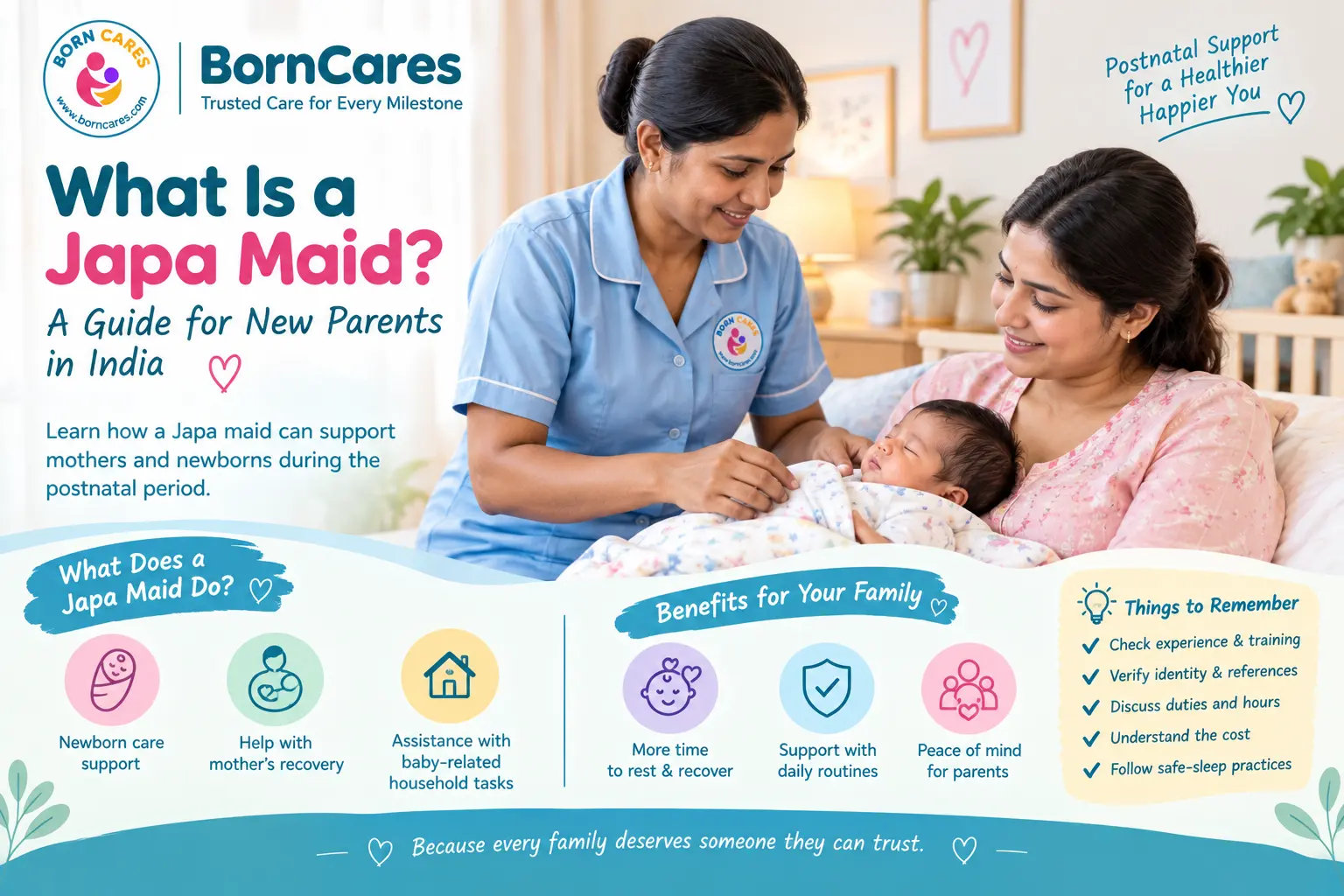
A Japa Maid is a caregiver who provides practical support to a mother and newborn during the postnatal period, particularly in Indian households.
Traditionally, Japa care may include assistance with newborn routines, helping the mother manage everyday baby-care responsibilities, and maintaining baby-related essentials.
The exact duties depend on the caregiver’s experience, family requirements, and agreed working arrangements.
A Japa Maid may help with:
- Everyday newborn care and hygiene.
- Diaper changing and dressing the baby.
- Assisting with burping and soothing.
- Following the mother’s feeding instructions.
- Organizing baby-care essentials.
- Providing practical household support related to newborn care.
- Helping the mother manage her daily routine.
It is important to understand that a Japa Maid is not automatically a trained nurse or medical professional. Medical care and post-delivery health concerns should be handled by qualified healthcare professionals.
2. How a Japa Maid Supports a New Mother After Delivery
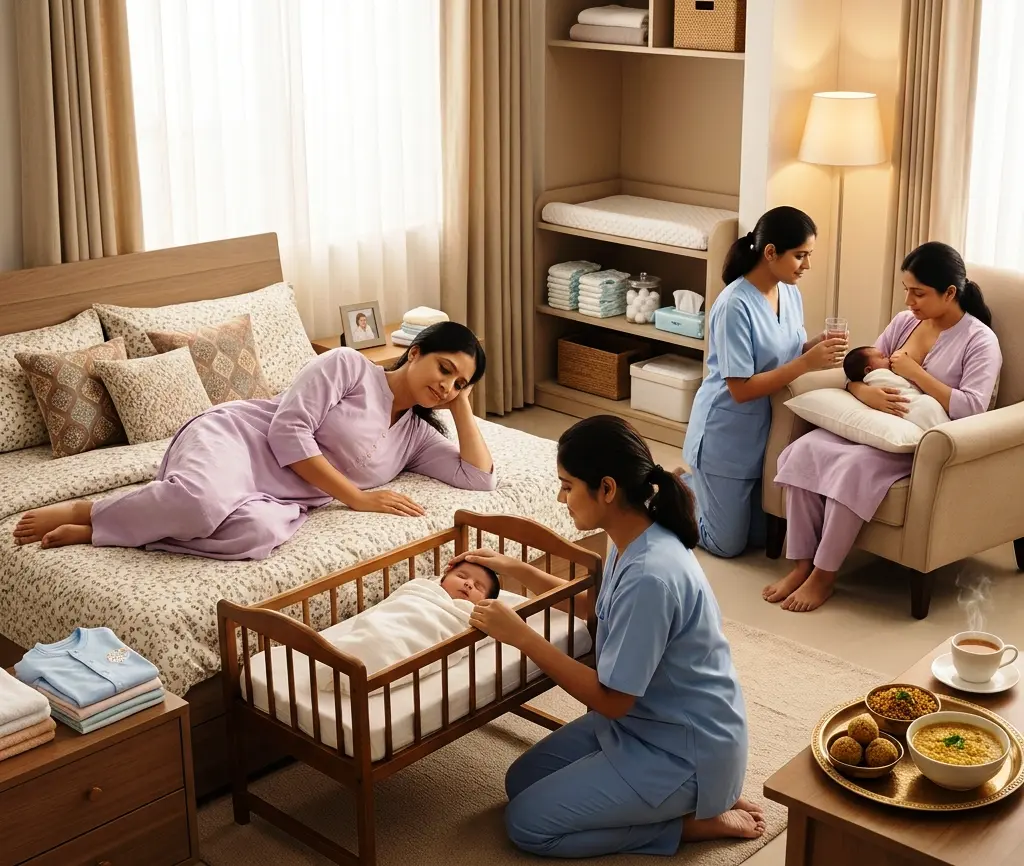
The post-delivery period involves many changes. A mother may experience tiredness, interrupted sleep, physical discomfort, and the challenge of learning newborn care.
A suitable Japa Maid can provide practical support in several ways.
A. Helping With Everyday Newborn Care
Newborns require frequent attention, particularly during their first few weeks.
A Japa Maid may assist with:
- Changing diapers regularly.
- Cleaning and dressing the baby.
- Following safe bathing instructions.
- Keeping the baby’s clothes and essentials organized.
- Helping soothe the baby when unsettled.
- Maintaining basic hygiene around the baby.
This assistance can help parents manage everyday responsibilities while remaining involved in their baby’s care.
B. Supporting the Mother’s Rest and Recovery
After childbirth, mothers need adequate rest and time to recover.
A Japa Maid may help reduce some daily responsibilities by assisting with baby-related tasks, organizing essentials, and supporting the mother’s routine.
This can give the mother more opportunities to rest between feeds and other newborn-care activities.
Remember that a caregiver does not replace postnatal medical check-ups or professional medical advice.
C. Assisting With Feeding Routines
Feeding is one of the most important parts of newborn care.
Depending on the family’s feeding plan, a Japa Maid may:
- Help prepare a comfortable feeding space.
- Bring clean feeding supplies when needed.
- Assist with positioning and burping under the parents’ guidance.
- Help maintain a record of feeding times.
- Clean and organize bottles and feeding equipment according to instructions.
Breastfeeding support requiring specialist knowledge should come from a qualified lactation professional. A Japa Maid should not independently change feeding plans or recommend supplements.
D. Helping With Baby Hygiene and Cleanliness
Newborn skin is delicate and requires gentle care.
A Japa Maid may help parents maintain everyday baby hygiene by:
- Changing diapers promptly.
- Cleaning the baby gently.
- Keeping baby clothes clean.
- Organizing towels, nappies, and changing supplies.
- Maintaining cleanliness of baby-care equipment.
She should follow safe hygiene practices and the parents’ instructions.
E. Providing Practical Emotional Support
The early days of motherhood can feel overwhelming, especially for first-time mothers.
Having a calm, patient, and supportive caregiver at home may help a mother feel less burdened by daily baby-care tasks.
A good caregiver should:
- Listen to the mother’s instructions.
- Respect her privacy and preferences.
- Communicate openly with family members.
- Avoid unnecessary pressure or criticism.
- Encourage the mother to seek professional help when needed.
Emotional support is valuable, but a caregiver should not be expected to diagnose or treat postnatal mental health concerns.
3. Helping With Baby-Related Household Responsibilities
Managing a newborn and household responsibilities together can be challenging for new parents.
Depending on the agreed duties, a Japa Maid may help with simple baby-related household tasks, such as:
- Washing or organizing the baby’s clothes.
- Keeping the baby’s sleeping area tidy.
- Arranging diapers, towels, and baby-care products.
- Cleaning and organizing feeding equipment.
- Keeping the baby’s essentials ready for daily use.
Families should discuss household responsibilities clearly before hiring to avoid misunderstandings.
4. Supporting First-Time Mothers
For first-time mothers, caring for a newborn can involve a lot of learning.
Questions about feeding, burping, diaper changes, and sleep routines are common during the early weeks.
An experienced caregiver may help by sharing practical newborn-care knowledge and assisting with everyday routines.
For example:
- Demonstrating gentle diaper-changing practices.
- Helping parents understand basic baby-care routines.
- Assisting with safe handling and positioning.
- Following the baby’s established feeding and sleeping instructions.
- Encouraging parents to ask healthcare professionals about concerns.
Parents should feel comfortable asking questions and making decisions about their baby’s care.
5. Daytime vs. 24-Hour Japa Maid Support
Every family has different post-delivery support requirements. Some mothers need assistance for a few hours during the day, while others may prefer extended support.
Daytime Japa Maid
Suitable for families who need assistance during specific daytime hours.
- Everyday newborn care.
- Diaper changes and baby hygiene.
- Organizing baby essentials.
- Practical support for the mother.
24-Hour Japa Maid
An extended care arrangement for families requiring more continuous assistance.
- Support with agreed newborn-care routines.
- Assistance during night-time baby-care activities.
- Help organizing baby essentials.
- Support according to agreed working and rest arrangements.
Important: A 24-hour arrangement should clearly define sleeping arrangements, uninterrupted rest periods, breaks, duties, and working conditions. Continuous availability should not mean expecting one person to work without adequate rest.
6. How to Choose the Right Japa Maid
Choosing the right caregiver requires careful consideration because she will be involved in your family’s daily routine.
Before hiring, consider these important points:
1. Previous experience
Ask about previous newborn-care experience and the age groups she has worked with.
2. Identity verification
Check identity documents and appropriate background information before confirming employment.
3. References
Ask for references from previous families, with their permission.
4. Hygiene knowledge
Discuss handwashing, diaper hygiene, feeding-equipment cleanliness, and safe baby handling.
5. Communication skills
Choose someone who listens carefully, communicates clearly, and respects your parenting preferences.
6. Clear responsibilities
Discuss working hours, duties, salary, weekly rest, leave, overtime, and replacement arrangements.
7. Emergency awareness
Ask how she would respond if the baby developed a fever, had breathing difficulties, or became unusually unresponsive. She should know when to contact the parents and seek urgent medical assistance.
7. What a Japa Maid Should Not Be Expected to Do
It is equally important to understand the limitations of a Japa Maid’s role.
Unless appropriately qualified and authorized, she should not:
- Diagnose medical conditions.
- Prescribe medicines or change prescribed doses.
- Perform medical procedures.
- Replace a doctor, nurse, or lactation consultant.
- Give traditional remedies without parental and medical approval.
- Make independent decisions about a baby’s feeding plan.
Traditional postnatal practices, including oil massage, special diets, and herbal preparations, should not automatically be considered safe for every mother or newborn. Discuss them with a qualified healthcare professional.
8. Benefits of Having a Japa Maid at Home
A suitable Japa Maid can make the post-delivery period more manageable for the entire family.
Some potential benefits include:
- Practical assistance: Help with everyday newborn-care responsibilities.
- More opportunities for rest: Support with baby-related tasks can create time for the mother to rest.
- Routine management: Help keep feeding, diaper, and baby-care activities organized.
- Support for first-time parents: Practical assistance while parents learn newborn-care routines.
- Family convenience: Care support in the familiar environment of home.
- Personalized assistance: Duties and working hours can be discussed according to family requirements.
The quality of support depends on the caregiver’s experience, working arrangement, and compatibility with the family.
9. Why Families Prefer Japa Maid Services at Home
Many families prefer home-based postnatal support because it allows the mother and baby to remain in a familiar environment.
With suitable assistance, families can:
- Maintain their preferred daily routine.
- Receive help without travelling for everyday childcare support.
- Discuss care preferences directly with the caregiver.
- Arrange support according to their schedule.
- Involve family members in the baby’s care.
The most important thing is finding a responsible caregiver who understands the family’s expectations and prioritizes the baby’s safety.
10. How BornCares Can Help Your Family
The first few weeks after delivery are important for both mother and baby. Having suitable support at home can make this period more comfortable and manageable.
BornCares helps families explore trusted home-based childcare and newborn-care options, including Japa Maid and postnatal support.
Our aim is to help families find care options based on their requirements, schedule, and preferences.
Whether you need daytime assistance, extended support, or help with everyday newborn-care routines, you can contact BornCares to discuss your needs.
Why explore BornCares?
- Home-based newborn-care options.
- Flexible care arrangements.
- Support according to family requirements.
- Assistance with exploring suitable caregivers.
- Family-focused service approach.
Because every family deserves someone they can trust.
Visit: www.borncares.com
Frequently Asked Questions (FAQs)
1. What does a Japa Maid do after delivery?
A Japa Maid provides practical assistance to a new mother and newborn. Duties may include diaper changes, baby hygiene, burping assistance, organizing baby essentials, and following the family’s newborn-care routine.
2. How long should a mother hire a Japa Maid?
The duration depends on the mother’s recovery, family requirements, and available support. Some families arrange assistance for a few weeks, while others prefer longer arrangements.
3. Can a Japa Maid take care of a newborn at night?
Yes, some caregivers offer night-time or extended support. Discuss working hours, duties, rest periods, and night-time responsibilities before hiring.
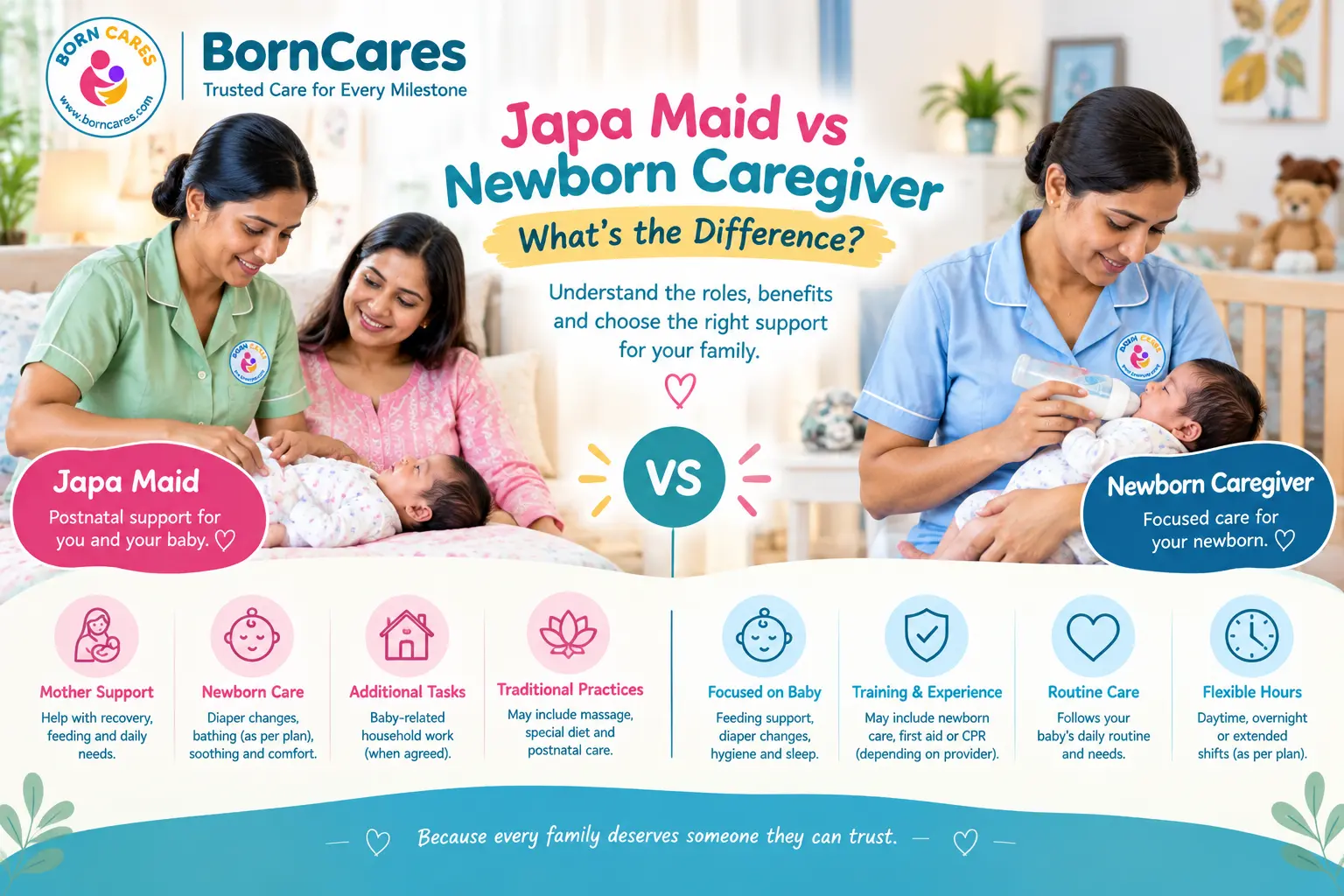
4. What is the difference between a Japa Maid and a newborn caregiver?
A Japa Maid traditionally provides practical postnatal assistance to both mother and baby. A newborn caregiver generally focuses on everyday infant care. However, responsibilities can overlap depending on experience and the agreed arrangement.
5. Does a Japa Maid help with breastfeeding?
She may help organize feeding supplies, make the mother comfortable, and assist with burping. Breastfeeding difficulties and specialist feeding advice should be addressed by a qualified lactation professional.
6. Is a Japa Maid suitable for first-time mothers?
A suitable and experienced caregiver can provide practical assistance and help first-time parents become familiar with everyday newborn-care routines.
7. What should I check before hiring a Japa Maid?
Check identity, previous experience, references, hygiene practices, working arrangements, and the caregiver’s understanding of newborn safety.
8. Can I hire a Japa Maid for daytime only?
Yes. Depending on availability, families can explore part-time, daytime, full-time, or extended support arrangements.
Conclusion
The journey of motherhood brings many beautiful moments, but the post-delivery period also requires patience, care, and support.
A suitable Japa Maid can help a new mother manage everyday newborn-care responsibilities, organize baby essentials, and get more opportunities to rest and recover.
Before hiring, always check experience, references, hygiene practices, and clearly agreed responsibilities.
Remember, the goal is not simply to find someone to care for the baby. It is to create a supportive environment where both mother and baby receive the attention they need.
BornCares – Caring for little ones, supporting growing families.