Finding the right babysitter is an important decision for every parent. Whether you are returning to work, managing household responsibilities, attending appointments, or simply need an extra helping hand, a reliable babysitter can make everyday family life easier.
However, choosing someone to care for your child requires careful planning. Parents want a person who is responsible, patient, trustworthy, and experienced with children. It is also important to understand the babysitter’s responsibilities, working hours, experience, and safety practices before making a decision.
In India, families can find babysitters through personal references, childcare agencies, online platforms, and professional home-based childcare services. But how do you know which option is right for your family?
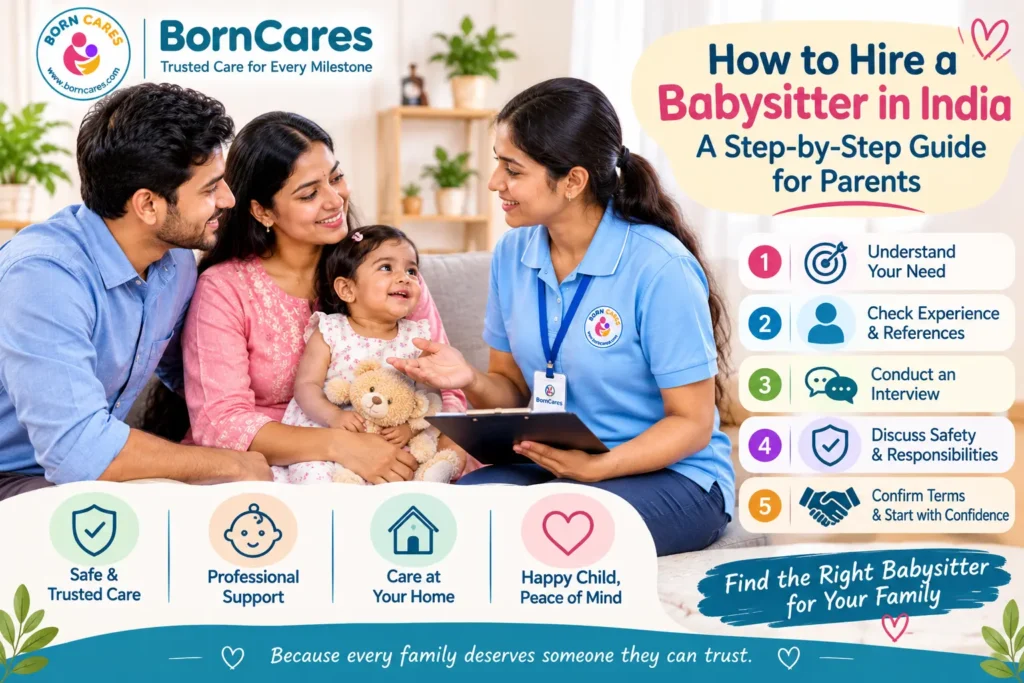
At BornCares, we believe every family deserves someone they can trust. This step-by-step guide will help you understand how to hire a babysitter in India and make a more informed decision for your child’s care.
1. Understand Why You Need a Babysitter
Before starting your search, identify why your family needs a babysitter. Understanding your requirements will help you find someone with suitable experience and availability.
Different families have different childcare needs.
For working parents
If both parents work, a babysitter may help supervise and care for the child during working hours. You may need someone for a regular daily schedule.
For occasional support
Some parents need a babysitter only when attending appointments, shopping, social events, or other personal commitments.
For newborn or infant care
Babies need frequent feeding, diaper changes, gentle handling, and close attention. If you have a newborn, look for someone with relevant newborn-care experience rather than assuming every babysitter is qualified for infant care.
For after-school support
Families with older children may need help with supervision, snacks, playtime, and agreed daily routines after school.
For extended hours
Some parents require early-morning, evening, or overnight childcare support. Discuss the schedule clearly and ensure the arrangement provides adequate breaks and rest for the caregiver.
Tip: Write down your childcare requirements before contacting any babysitter. This will help you compare candidates more easily.
2. Decide What Type of Babysitter You Need
Babysitting arrangements can differ depending on the child’s age, family routine, and required hours.
Part-time babysitter
A part-time babysitter may work for a few hours each day or on selected days of the week.
This arrangement may suit parents who need help during specific periods.
Full-time babysitter
A full-time babysitter provides regular childcare support during agreed working hours.
This may be useful for working parents or families who need consistent assistance.
Live-in babysitter
Some families prefer a live-in caregiver who stays at the home. In this arrangement, parents must clearly discuss working hours, sleeping arrangements, private time, weekly days off, and responsibilities.
Live-in arrangements should not mean that a caregiver is expected to work continuously without proper rest.
Newborn babysitter
Newborn care requires particular attention and experience. Parents should look for someone familiar with newborn handling, feeding routines, diaper changes, hygiene, and safe-sleep practices.
A babysitter is not automatically a trained nurse or medical professional. If your baby has special medical needs, consult the healthcare team about the appropriate level of care.
3. Prepare a Clear Babysitter Job Description
Before searching for a babysitter, prepare a simple job description.
This helps candidates understand your expectations and prevents misunderstandings later.
Your job description should include:
- Child’s age.
- Number of children requiring care.
- Required working hours.
- Part-time or full-time arrangement.
- Main childcare responsibilities.
- Preferred experience.
- Required language or communication skills.
- Location of the job.
- Expected joining date.
- Salary or payment arrangement.
Example babysitter job description
Position: Babysitter / Childcare Caregiver
Location: Delhi NCR
Responsibilities:
- Supervise and care for the child.
- Assist with age-appropriate feeding routines.
- Change diapers when required.
- Maintain the child’s hygiene.
- Organize toys and baby-care essentials.
- Engage the child in suitable activities.
- Follow the parents’ instructions.
- Inform parents about important changes or concerns.
Requirements:
- Previous childcare experience preferred.
- Responsible and patient attitude.
- Good communication.
- Understanding of child safety and hygiene.
- Relevant newborn-care experience if caring for an infant.
You can adjust this description according to your family’s requirements.
4. Where Can You Find a Babysitter in India?
Once you know what you need, the next step is finding suitable candidates.
Here are some common ways Indian families search for babysitters.
A. Through family and friends
Personal references can be a useful starting point.
Ask relatives, friends, neighbours, or colleagues whether they know someone with childcare experience.
However, a personal recommendation should not replace identity verification, reference checks, and an interview.
B. Through professional childcare agencies
Childcare agencies may help families find babysitters, nannies, and newborn caregivers.
Before choosing an agency, ask about:
- Candidate screening procedures.
- Identity verification.
- Reference checks.
- Experience verification.
- Replacement policies.
- Service fees.
- Written service agreements.
Do not assume that every agency follows the same screening process.
C. Through online platforms
Some websites and applications connect families with childcare providers.
When using an online platform, check the candidate’s profile carefully. Ask for references and independently verify important information before allowing anyone to care for your child.
D. Through professional home-based childcare services
Professional home-based childcare services may help families explore caregivers according to their location, child’s age, and required schedule.
BornCares helps families enquire about home-based childcare options, including babysitter, nanny, and newborn-care support.
5. Check the Babysitter’s Experience and Background
This is one of the most important steps in hiring a babysitter.
Parents should take time to understand the candidate’s experience and suitability before making a final decision.
Ask about previous childcare experience
Find out:
- How long have you worked as a babysitter?
- What age groups have you cared for?
- Have you cared for newborns or infants?
- How many children have you supervised at one time?
- What responsibilities did your previous jobs include?
- Can you provide references from previous families?
Look for experience that matches your child’s age and needs.
Verify identity
Ask for appropriate identity documents and verify them through a responsible process.
For agency-arranged caregivers, ask what identity checks have already been completed and whether you can review the verification status.
Handle personal documents carefully and do not share them unnecessarily.
Check references
If possible, contact previous employers or families.
Ask questions such as:
- Was the babysitter punctual and reliable?
- Did the caregiver follow instructions?
- How did they communicate with parents?
- Were there any concerns about safety or behaviour?
- Would you recommend hiring this person again?
References can provide useful information, but they should be considered alongside other checks.
Discuss police verification where appropriate
Depending on the location and arrangement, families may request police verification or other background checks.
Ask the agency or local authorities about the appropriate process. Do not assume that a document or agency claim automatically guarantees a person’s suitability.
6. Conduct a Proper Babysitter Interview
Once you have shortlisted candidates, arrange an interview.
An interview helps you understand the person’s attitude, communication style, experience, and approach to childcare.
Here are useful questions to ask.
Questions about experience
- How long have you worked as a babysitter?
- What age groups have you cared for?
- Have you handled newborn or infant care?
- What activities do you usually do with children?
- Can you share references from previous families?
Questions about daily childcare
- How would you manage a child’s feeding routine?
- How do you comfort a crying baby?
- How do you manage diaper changes?
- What would you do if a child refused food?
- How do you keep children engaged safely?
Questions about safety
- What would you do if a child suddenly became unwell?
- Do you know basic first aid?
- Have you received infant or child CPR training?
- How would you respond if a child started choking?
- How do you follow safe-sleep practices for infants?
Ask candidates to explain their answers in practical terms. For emergency situations, look for an understanding of when to contact parents and seek immediate professional help.
7. Observe How the Babysitter Interacts With Your Child
An interview alone may not tell you everything.
If possible, arrange a supervised introduction where you can observe how the babysitter interacts with your child.
Look for:
- A calm and patient attitude.
- Gentle and respectful handling.
- Clear communication.
- Attention to the child’s needs.
- Willingness to follow parental instructions.
- Appropriate responses to the child’s behaviour.
- Respect for the child’s comfort and boundaries.
Do not force your child to interact immediately. Give them time to become comfortable.
For infants, observe how the caregiver supports the baby’s head and neck, handles the baby gently, and follows safe-care instructions.
A supervised introduction is not a substitute for background checks or a proper hiring process.
8. Discuss Responsibilities and Expectations Clearly
Before hiring, explain exactly what you expect from the babysitter.
Some parents require only childcare, while others may request additional baby-related tasks.
Common babysitting responsibilities
Depending on the agreement, these may include:
- Supervising the child.
- Helping with feeding routines.
- Changing diapers.
- Maintaining personal hygiene.
- Organizing toys and childcare essentials.
- Engaging children in age-appropriate play.
- Following nap and sleep routines.
- Sharing updates with parents.
Additional duties
If you expect help with baby laundry, preparing simple meals for older children, or organizing play areas, discuss these tasks separately.
Do not assume that general house cleaning, cooking for the family, or caring for additional children is automatically included in babysitting.
Prepare a written list of responsibilities so everyone understands the arrangement.
9. Discuss Salary, Working Hours, and Weekly Holidays
Payment and working conditions should be discussed before the babysitter starts.
The cost of hiring a babysitter in India depends on:
- City and locality.
- Child’s age.
- Number of children.
- Babysitter’s experience.
- Part-time or full-time schedule.
- Daytime or overnight shifts.
- Live-in or live-out arrangement.
- Additional responsibilities.
There is no single salary that applies to every family.
Confirm these details
- Monthly salary or hourly rate.
- Payment date and payment method.
- Daily working hours.
- Weekly holidays.
- Breaks and rest periods.
- Extra-hour charges.
- Festival or holiday arrangements.
- Leave policy.
- Notice period.
- Replacement arrangements, if hired through an agency.
Put the agreed terms in writing.
A fair arrangement helps create a professional relationship and supports consistent childcare.
10. Prepare Your Home Before the Babysitter Starts
A safe and organized home can help the babysitter follow your child’s routine.
Before the first working day, prepare the following:
Childcare essentials
- Clean clothes.
- Diapers and wipes.
- Towels and washcloths.
- Feeding supplies.
- Age-appropriate toys.
- Baby-care products approved by parents.
Safety arrangements
- A safe infant sleep space.
- Childproofed areas where necessary.
- Safe storage for medicines and cleaning products.
- Emergency contact information.
- Important medical information.
- A clear plan for emergencies.
Daily routine
Write down important instructions about:
- Feeding times and feeding methods.
- Nap routines.
- Diaper-changing preferences.
- Allergy information.
- Approved food and products.
- Activities suitable for the child’s age.
- Parent contact details.
Explain household rules and how you want the babysitter to share updates.
11. Understand Important Babysitter Safety Practices
A babysitter should understand basic safety responsibilities appropriate to the child’s age.
Safe sleep for babies
For every sleep, place an infant on their back on a firm, flat, separate sleep surface. Keep pillows, loose blankets, and soft toys out of the sleep area.
Feeding safety
Follow the child’s established feeding plan and appropriate hygiene practices. Never force-feed a child or change a baby’s feeding plan without parental and professional guidance.
Supervision
Young children should not be left unattended near water, stairs, balconies, open windows, cooking areas, or other hazards.
Safe handling
Support a newborn’s head and neck. Never shake a baby or use forceful handling.
Emergency response
Share emergency numbers and explain what to do if a child is injured or becomes seriously unwell.
A baby under three months with a temperature of 38°C (100.4°F) or higher needs urgent medical assessment. Breathing difficulties, blue or grey skin, seizures, or unresponsiveness require emergency help.
Caregivers should not diagnose medical conditions or give unapproved medicines.
12. Arrange a Trial and Review the First Few Days
Once you have completed the checks and agreed on the terms, you can arrange a supervised introduction or trial period.
During the initial days:
- Explain the child’s routine.
- Introduce the caregiver gradually.
- Observe interactions.
- Share important instructions.
- Ask for regular updates.
- Encourage the caregiver to ask questions.
- Review any concerns promptly.
A trial period can help both the family and caregiver understand whether the arrangement is suitable.
Do not leave a child with someone whose identity, references, or suitability have not been adequately checked simply because a trial is scheduled.
13. Common Mistakes Parents Should Avoid
Parents sometimes make hiring decisions in a hurry. Avoid these common mistakes:
Choosing only based on salary
A low price does not automatically mean good value. Consider experience, references, reliability, and safety practices.
Not checking references
Always try to verify previous childcare experience.
Not explaining responsibilities
Unclear expectations can lead to misunderstandings.
Ignoring communication
A babysitter should be comfortable sharing updates and reporting concerns.
Assuming experience means professional training
Years of experience do not automatically mean the caregiver has first-aid or infant-care qualifications.
Not preparing an emergency plan
Parents should provide clear emergency contacts and instructions before childcare begins.
Not reviewing the arrangement
Check in regularly to ensure the caregiver and family remain comfortable with the agreed responsibilities.
14. Frequently Asked Questions
How do I find a reliable babysitter in India?
You can begin with personal references, professional childcare agencies, online platforms, or home-based childcare services. Check identity, references, experience, and relevant training before hiring.
What qualifications should a babysitter have?
Requirements depend on the child’s age and needs. Look for relevant childcare experience and ask about first-aid or CPR training. For newborn care, verify specific newborn-care experience.
How much does a babysitter cost in India?
The cost varies by city, experience, working hours, number of children, and responsibilities. Request a clear quotation based on your requirements.
Should I hire a full-time or part-time babysitter?
Choose according to your family’s schedule. Part-time support may suit occasional needs, while full-time support may be appropriate for families requiring regular childcare.
Can a babysitter take care of a newborn?
Some babysitters have newborn-care experience, while others may not. Verify their experience and understanding of safe sleep, feeding hygiene, and gentle newborn handling.
Should I ask for police verification?
You may request appropriate background checks and identity verification. Ask the agency or relevant local authorities about the correct process for your location.
How long does it take for a child to become comfortable with a babysitter?
It varies from child to child. A gradual, supervised introduction and consistent communication can help the child become familiar with the caregiver.
Can a babysitter also help with household work?
Some baby-related tasks may be included if agreed upon. General household work should be discussed separately and should not interfere with the child’s supervision and safety.
Conclusion
Hiring the right babysitter in India requires more than finding someone who is available. Parents should understand their childcare needs, check experience and references, conduct a proper interview, discuss responsibilities, and make safety a priority.
A suitable babysitter can provide practical support with everyday childcare while helping parents manage work and family responsibilities.
Take your time, ask the right questions, and choose someone who respects your child’s needs and your family’s instructions.
At BornCares, we understand how important it is to find reliable childcare support at home. We help families explore babysitter, nanny, and newborn-care service options according to their requirements.
Because every family deserves someone they can trust.
Health note: This article provides general educational information and does not replace professional medical or childcare advice. Consult qualified healthcare professionals for medical concerns about your child.