
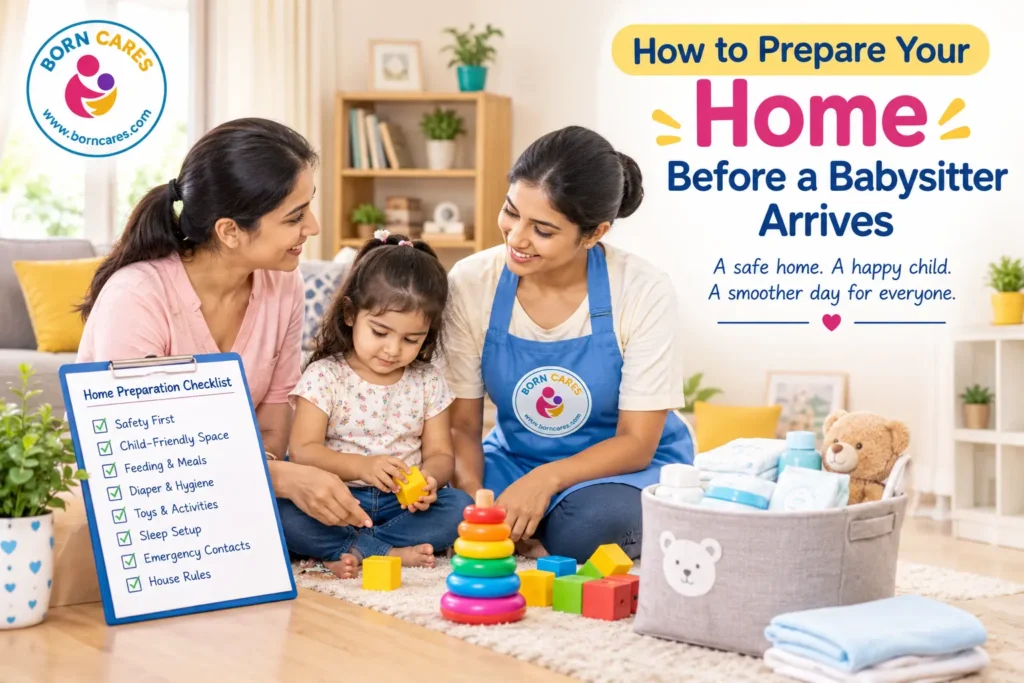
Preparing your home before a babysitter arrives is an important step in creating a safe, comfortable, and welcoming environment for your child. Whether you are hiring a babysitter for a few hours, a full working day, or regular childcare support, a little preparation can make the experience easier for everyone.
For many parents in India, balancing work, household responsibilities, and childcare can be challenging. A suitable babysitter can help care for your child at home while you manage your daily routine. However, the caregiver needs clear instructions, access to essential supplies, and an understanding of your child’s habits.
From childproofing your home to preparing meals, organizing toys, and sharing emergency contacts, there are several things you can do before your babysitter arrives.
In this guide, we will explain how to prepare your home before a babysitter arrives, with practical tips to help parents create a safe and organized childcare environment.
Why Is It Important to Prepare Your Home Before a Babysitter Arrives?
A well-prepared home helps a babysitter understand your child’s needs and follow your family’s routine more easily.
When important supplies are organized and household rules are explained in advance, the caregiver can spend less time searching for things and more time supervising your child.
Preparing your home can help you:
- Reduce common household safety risks.
- Make feeding, changing, and playtime more organized.
- Help your child feel comfortable with a new caregiver.
- Share important instructions clearly.
- Make emergency information easy to find.
- Build a positive working relationship with your babysitter.
Remember that preparing your home does not replace active supervision. Young children need age-appropriate attention throughout the babysitting period.
1. Make Your Home Safe for Children
Child safety should be your first priority before a babysitter arrives. Children are naturally curious and may explore cupboards, climb furniture, or reach for objects that look interesting.
Walk through the rooms where your child will spend time and identify potential hazards.
Secure dangerous items
Keep medicines, cleaning products, sharp tools, matches, and other hazardous materials locked away and out of children’s reach. Do not rely only on placing them on a high shelf, especially if your child can climb.
Keep hot drinks, cooking utensils, and electrical appliances away from areas where children play.
Check stairs, windows, and balconies
Use suitable safety gates where necessary and ensure that windows and balconies are secure. Never assume a child is safe simply because an adult is nearby.
Explain which areas are restricted and which doors or gates must remain closed.
Remove choking hazards
Small objects such as loose buttons, coins, batteries, and tiny toy parts can pose choking risks, especially for babies and toddlers.
Inspect the play area and remove items that are not suitable for your child’s age.
Secure furniture and electrical items
Make sure heavy furniture is stable and secured where appropriate. Cover or secure electrical outlets according to applicable safety guidance, and keep electrical cords away from children.
Before the babysitter starts, show them the safest areas for playing, eating, and resting.
2. Prepare Your Child’s Daily Routine
Children often feel more comfortable when their day follows a familiar routine. Sharing your child’s schedule with the babysitter can make the transition easier.
Write down the usual timings for meals, naps, playtime, and other important activities.
For example, your child’s routine might include:
- Breakfast or a morning snack.
- Indoor play or reading time.
- Lunch at the usual time.
- An afternoon nap or quiet activity.
- Outdoor play only where suitable and safely supervised.
- Evening snacks and preparation for bedtime.
The schedule should reflect your child’s age and individual needs rather than follow a strict timetable.
Explain what usually helps your child settle down, what activities they enjoy, and how you prefer the caregiver to respond when your child becomes upset.
For babies, provide clear instructions about feeding, diaper changes, and sleep. For older children, explain toilet routines, favourite activities, and any important behavioural or emotional needs.
A written routine is especially useful if you will be away from home for several hours.
3. Organize Feeding Supplies and Meals
Before leaving your child with a babysitter, make sure the necessary food and feeding supplies are easy to find.
For toddlers and older children, prepare suitable meals or snacks in advance if that is part of your arrangement with the caregiver.
Clearly label containers and explain any dietary restrictions, food allergies, or foods your child should avoid.
For babies
If your babysitter will care for a newborn or infant, discuss feeding arrangements in detail.
Prepare the supplies needed for the agreed feeding routine, such as clean bottles or properly stored expressed breast milk. Explain the instructions you follow for handling and storing milk or preparing formula according to appropriate health guidance.
Never assume that a caregiver already knows your baby’s specific feeding requirements.
For older children
Keep suitable snacks, drinking water, plates, cups, and utensils in an accessible location that is safe for the caregiver to use.
Explain any rules about sweets, packaged snacks, or foods that may cause allergies.
Young children should be seated and supervised while eating. Avoid giving them foods that present choking risks.
If your child has a known allergy, clearly communicate the risk, prevention steps, and emergency instructions agreed with their healthcare professional.
4. Set Up a Clean and Comfortable Changing Area
If your babysitter will change diapers or help your child use the toilet, prepare a clean and organized area before they arrive.
Keep essential supplies together so the caregiver does not need to leave the child unattended while searching for something.
For babies, the changing area may include:
- Clean diapers.
- Baby wipes or suitable cleaning supplies.
- A changing mat.
- Clean clothes.
- A designated bin for used diapers.
- A safe place to store creams or other products.
Keep creams, medicines, and other products out of children’s reach.
Important safety tip: Never leave a baby unattended on a raised changing surface, even for a moment. Keep one hand on the baby when necessary and prepare all supplies beforehand.
If your child is toilet training, explain the routine, where spare clothes are kept, and how you prefer the caregiver to support your child.
A clean, well-organized changing area makes daily care more manageable and supports good hygiene.
5. Prepare a Safe Play Area
Play is an important part of children’s learning and development. Before your babysitter arrives, prepare a space where your child can play safely under appropriate supervision.
Choose toys and activities that match your child’s age and interests.
For younger children, you might provide:
- Large building blocks suitable for their age.
- Board books and picture books.
- Soft toys that are appropriate for their age.
- Stacking toys without small detachable parts.
- Simple music or movement activities.
For older children, you might organize drawing materials, puzzles, pretend-play toys, or age-appropriate games.
Check toys regularly for broken parts, sharp edges, loose components, or other hazards.
Keep the play area away from hot surfaces, balconies, stairs, and unsecured furniture.
Explain which toys your child enjoys and whether there are any activities that should be avoided.
If outdoor play is allowed, clearly discuss where it can take place and what level of supervision is required. The babysitter should never leave your child alone in an outdoor area.
6. Prepare Your Child’s Sleeping Area
If your babysitter will care for your child during nap time or bedtime, make sure the sleeping area is ready before you leave.
For older children, prepare their usual bed, clean bedding, and any familiar bedtime items that are appropriate and safe.
Explain your child’s usual sleep routine, including the time they normally rest and what helps them settle down.
For infants, safe sleep arrangements are particularly important.
Place babies on their backs to sleep on a firm, flat, approved sleep surface. Keep pillows, loose blankets, stuffed toys, and other soft objects out of the baby’s sleep space.
Avoid using sofas, adult beds, or other unsuitable surfaces as a substitute for an infant’s safe sleep space.
Tell the babysitter where the baby sleeps and explain the safe sleep practices you expect them to follow.
If your child has a particular bedtime routine, such as reading a story or listening to a quiet song, explain it in advance.
Never assume that a caregiver knows your family’s preferred sleep arrangements without discussing them.
7. Keep Emergency Contacts and Important Information Ready
One of the most useful things you can do before a babysitter arrives is prepare an emergency information sheet.
The caregiver should know how to reach you and what to do if something unexpected happens.
Include the following information:
- Your primary phone number.
- An alternative parent or guardian contact.
- A trusted emergency contact nearby.
- Your home address.
- Local emergency service information.
- Relevant allergies or medical information.
- Any important instructions for urgent situations.
Explain when the babysitter should call you and when they should seek immediate professional assistance.
For example, serious breathing difficulties, choking, unconsciousness, or other life-threatening situations require urgent emergency help rather than waiting for a parent to respond.
If your child has prescribed medication or a specific medical care plan, provide clear instructions and explain any relevant limitations on the caregiver’s responsibilities.
Store the information in a location that the babysitter can access quickly, while keeping private information secure.
8. Explain Your House Rules Clearly
Every household has different rules. Explaining these rules before the babysitter begins can prevent confusion and help maintain consistency for your child.
Discuss important expectations, including:
Screen time
Explain whether your child can watch television or use a device and what limits apply.
Visitors
Clarify whether visitors are allowed during working hours. For safety and privacy, establish clear boundaries in advance.
Phone use
Discuss reasonable expectations about personal phone use while the caregiver is responsible for your child.
Food and kitchen use
Explain which foods and kitchen facilities the caregiver may use and where supplies are stored.
Leaving the home
Make it clear whether outings are allowed. Agree on approved locations, transport arrangements, supervision, and whether you must give permission before any outing.
Photographs and privacy
Explain your expectations about taking photographs, recording videos, or sharing information about your child. Obtain clear agreement about privacy and consent.
Write down important rules instead of relying on a quick verbal conversation. This helps the caregiver refer back to them when necessary.
9. Keep Essential Supplies in One Place
An organized home makes it easier for a babysitter to find what they need.
Create a designated childcare station or basket with the everyday items your caregiver is likely to use.
Depending on your child’s age and needs, it may include:
- Diapers and wipes.
- Spare clothes.
- Bibs and burp cloths.
- Feeding supplies.
- Age-appropriate toys and books.
- Tissues and suitable hygiene supplies.
- A written daily routine.
- Emergency contact information.
Store medicines, cleaning products, sharp objects, and other hazardous materials separately in secure locations.
Show the babysitter where the essential supplies are kept and explain how to replace or report items that run low.
If your home has several floors, consider whether frequently used items can be organized in a safe and convenient area.
The aim is not to make the house look perfect. It is to create a practical environment that supports your child’s daily care.
10. Introduce Your Child to the Babysitter
A new caregiver may be unfamiliar to your child, so an introduction before the actual babysitting period can be helpful.
If possible, arrange a short meeting while you are at home. Let the babysitter speak to your child, play a simple game, or read a story while you remain nearby.
This gives your child an opportunity to become familiar with the caregiver in a comfortable setting.
Help your child feel prepared
Explain in simple, age-appropriate language who the babysitter is and what will happen while you are away.
Avoid making promises you cannot keep, such as saying you will return immediately if you will be gone for several hours.
Share your child’s preferences
Tell the caregiver about your child’s favourite activities, comfort routines, and any situations that may make them anxious.
For example, your child may need a little extra time to warm up to new people or may feel upset when a parent leaves.
Observe the interaction
Notice whether the caregiver is patient, attentive, and respectful of your child’s comfort.
Allow the relationship to develop gradually. Do not force a child to hug, sit with, or immediately trust a new caregiver.
If you observe unsafe behaviour or your child repeatedly expresses serious distress, take the situation seriously and investigate.
11. Discuss Working Hours and Responsibilities
Preparing your home is important, but clear communication about the babysitting arrangement matters just as much.
Before the caregiver arrives, confirm the start time, expected finishing time, payment terms, and agreed responsibilities.
Explain whether the caregiver will be responsible for feeding, diaper changes, playtime, helping with naps, or other child-related tasks.
If you need additional help, discuss it in advance rather than assuming it is included in the babysitting role.
You should also agree on what happens if you are delayed or need to extend the scheduled hours.
Make sure the babysitter has a way to contact you and understands how to reach the home safely.
Clear arrangements support a professional relationship and help both parents and caregivers understand their responsibilities.
12. Complete a Final Walk-Through Before Leaving
Once your home is ready, spend a few minutes reviewing the important details with your babysitter.
Walk through the main areas your child will use and point out any hazards, restricted spaces, or special instructions.
Use this time to confirm that the caregiver understands the daily routine, feeding arrangements, emergency information, and household rules.
Before leaving, make sure:
- Your child is comfortable with the immediate arrangement.
- Essential supplies are available.
- Emergency contacts are accessible.
- Safety hazards have been addressed.
- The caregiver knows how to contact you.
- You have agreed on when and how updates will be shared.
Invite the babysitter to ask questions. It is better to clarify a small detail before leaving than to allow uncertainty to continue.
Remember that a prepared home supports good childcare, but it does not replace the need for a suitable caregiver and attentive supervision.
Home Preparation Checklist Before a Babysitter Arrives
Use this simple checklist before your next babysitting session.
- Secure medicines, cleaning products, and other hazards.
- Remove choking hazards from play areas.
- Prepare your child’s daily routine.
- Organize meals and feeding supplies.
- Set up a clean changing area.
- Prepare suitable toys and activities.
- Check the child’s sleeping arrangements.
- Write down emergency contacts.
- Explain house rules and privacy expectations.
- Introduce your child to the babysitter.
- Confirm working hours and responsibilities.
- Review important instructions before leaving.
You can save or print this list to make future babysitting arrangements easier.
Frequently Asked Questions (FAQs)
1. What should I prepare before a babysitter arrives?
Prepare a safe play area, feeding supplies, clean clothes, changing essentials, your child’s daily routine, and emergency contact information. Explain your house rules and any specific care instructions.
2. Should I clean my entire house before a babysitter comes?
No. Your home does not need to be perfectly clean. Focus on the areas your child will use, remove safety hazards, and keep essential childcare supplies organized.
3. How can I make my child comfortable with a new babysitter?
Arrange an introduction while you are present, share your child’s interests and routine, and allow the relationship to develop gradually. Respect your child’s comfort and pay attention to any concerning behaviour.
4. What emergency information should I leave for a babysitter?
Provide your phone number, an alternative emergency contact, your home address, relevant allergy or medical information, and instructions about contacting emergency services.
5. How can I make my home safer for a baby?
Secure hazardous items, remove small objects, check furniture stability, and keep the baby’s sleep space clear and appropriate. Discuss safe handling, feeding, and sleep practices with the caregiver.
6. Should I leave written instructions for a babysitter?
Yes. Written instructions can cover feeding, naps, changing, household rules, emergency contacts, and communication preferences. They are especially helpful when you will be away for an extended period.
7. How early should I prepare my home?
Ideally, organize the essential supplies and address safety concerns before the caregiver’s first visit. Leave enough time for an introduction and a brief discussion of your child’s routine.
Conclusion
Preparing your home before a babysitter arrives can make childcare more organized, comfortable, and easier to manage. By addressing safety hazards, organizing essential supplies, explaining your child’s routine, and sharing emergency information, you help the caregiver understand your family’s needs.
Remember that preparation does not have to be complicated. Start with the essentials, communicate clearly, and make sure your child has an appropriate environment for eating, playing, resting, and receiving care.
Choosing a suitable caregiver is equally important. Take time to discuss experience, responsibilities, safety practices, and working arrangements before making your decision.
Looking for childcare support at home?
BornCares helps families explore childcare options, including babysitter and nanny services, newborn care, Japa maid services, and special child care.
Visit www.borncares.com to explore available services and discuss your family’s childcare requirements.
BornCares — Because every family deserves someone they can trust.