
Bringing a newborn home is one of the most beautiful experiences for parents. It is also a time when everything can feel new, uncertain, and exhausting.
A baby’s feeding schedule may change from day to day. Sleep can be unpredictable. Simple tasks can suddenly take much longer than expected. Parents may find themselves trying to balance recovery, household responsibilities, work, and the constant needs of a newborn.
This is where the right childcare support can make everyday life a little easier.
For some families, hiring professional Babysitter Services for Newborns can provide practical support while allowing parents to spend more meaningful time with their baby. But choosing someone to care for a newborn is different from choosing a caregiver for an older child.
Newborns need gentle handling, close attention, hygiene, patience, and a caregiver who understands that even small details matter.
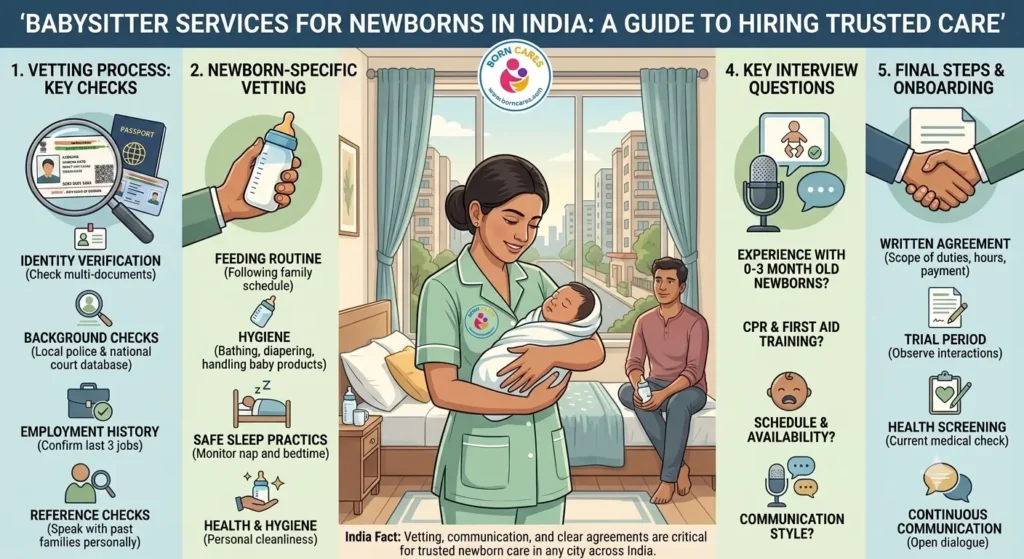
If you are considering newborn babysitter services, here are the important things to know before making your decision.
Why Newborn Care Requires Special Attention
Newborn babies depend almost entirely on adults for their basic needs.
They cannot explain when they are hungry, uncomfortable, tired, or unwell. Parents and caregivers need to pay attention to small signals and respond appropriately.
Newborn care may involve:
- Feeding according to the parent’s instructions
- Burping and settling the baby
- Diaper changes
- Maintaining cleanliness
- Following sleep routines
- Gentle interaction and soothing
- Keeping the baby’s surroundings comfortable
- Observing changes in the baby’s behavior
- Communicating concerns to the parents
This is why experience with newborns can be particularly valuable.
A caregiver may have several years of general childcare experience, but parents should still ask whether they have actually cared for babies in the newborn stage.
The goal is not to find someone who simply knows how to “watch a baby.”
You want someone who understands the level of attention a newborn requires.
Start by Understanding the Support Your Family Needs
Before looking for Babysitter Services, think about why you need help.
Perhaps you are a first-time parent who wants additional support during the day. Maybe both parents work. You may need help for a few hours while you rest, attend appointments, or complete household responsibilities.
Your needs could also change as your baby grows.
Ask yourself:
- How many hours of support do we need?
- Do we need daytime or nighttime assistance?
- Will the caregiver be responsible only for the baby?
- Will feeding support be required?
- Do we need help maintaining the baby’s routine?
- Do we need occasional or regular care?
- Does our family need additional newborn or postnatal support?
Being clear about your requirements before starting your search can prevent confusion later.
Look for Experience With Newborn Babies
When hiring someone for newborn care, experience should be one of your first considerations.
Ask the caregiver about their previous experience with babies.
You can ask:
How many newborns have you cared for?
What age were the babies when you started caring for them?
What responsibilities did you have?
How did you handle feeding and sleep routines?
How do you comfort a crying baby?
What would you do if you noticed something unusual about the baby’s behavior?
These questions can help you understand whether the caregiver has practical experience rather than only general childcare knowledge.
A good caregiver should also be comfortable following the parents’ instructions.
Every baby is different, and parents may have specific preferences regarding feeding, sleep, hygiene, and daily routines.
Ask About Safe and Gentle Baby Handling
Newborns need particularly gentle handling.
Parents should observe how a potential caregiver holds, carries, changes, feeds, and settles a baby.
The caregiver should understand that newborns need their head and neck properly supported and should be handled calmly.
You can also ask how they approach everyday situations such as:
- Picking up a crying baby
- Changing diapers
- Feeding
- Burping
- Settling the baby
- Moving the baby between rooms
- Maintaining a clean care environment
If the caregiver seems rushed or careless during these conversations, it is reasonable to reconsider.
With newborns, patience and attentiveness are extremely important.
Discuss Feeding Instructions Clearly
Feeding is an important part of newborn care.
Depending on the baby’s feeding arrangement, parents may need to provide very specific instructions.
If expressed breast milk or formula is involved, parents should clearly explain their preferred routine and preparation instructions.
A caregiver should not make assumptions about how or when a baby should be fed.
Instead, they should follow the parents’ instructions and communicate if the baby is having difficulty feeding or behaving differently from normal.
It can be helpful to create a simple written routine that includes feeding times and any instructions the caregiver needs to follow.
This reduces confusion and gives both the parents and caregiver a clear reference.
Sleep Routine Matters Too
Newborn sleep can be unpredictable.
Parents should not expect a newborn to follow a perfectly fixed schedule. However, caregivers should understand the family’s preferred approach to rest and sleep.
Discuss:
- The baby’s usual sleep patterns
- Where the baby sleeps
- The family’s safe-sleep practices
- How parents prefer the baby to be settled
- What the caregiver should do if the baby wakes unexpectedly
Most importantly, parents should communicate their safety expectations clearly.
A caregiver should follow appropriate safe-sleep guidance and the family’s instructions rather than improvising.
If there is ever uncertainty about a baby’s sleep, feeding, or health, the caregiver should contact the parents and, where appropriate, seek professional medical advice.
Hygiene Should Be a Daily Priority
Newborn care involves frequent cleaning and hygiene.
Diapers need to be changed regularly. Feeding equipment may need careful cleaning according to the family’s instructions. The baby’s clothing, bedding, and surroundings should also be kept clean.
Before hiring a caregiver, discuss your family’s hygiene expectations.
Ask how they normally maintain cleanliness while caring for a newborn.
You should also observe basic habits such as hand hygiene and cleanliness before handling the baby.
Small habits can make a meaningful difference in maintaining a clean and comfortable environment.
Pay Attention to Communication
Parents should never feel disconnected from what is happening with their newborn.
Before hiring a caregiver, decide how communication will work.
For example, you may want updates about:
- Feeding
- Sleep
- Diaper changes
- Mood
- Unusual behavior
- Any concerns noticed during the day
You can also agree on which situations require an immediate phone call.
Clear communication helps parents remain informed and gives the caregiver a clear understanding of when to ask for help.
A good caregiver should never feel uncomfortable saying, “I noticed something different today.”
That kind of communication is valuable.
Ask How They Handle a Crying Baby
Crying is one of the biggest challenges for new parents.
A newborn may cry because they are hungry, tired, uncomfortable, overstimulated, or simply seeking comfort.
Ask the caregiver how they respond when a baby cries.
You are looking for patience rather than frustration.
A responsible caregiver should calmly check the baby’s basic needs and follow the parents’ preferred soothing approach.
They should never shake, roughly handle, shout at, or otherwise respond aggressively to a crying baby.
If a caregiver becomes overwhelmed, they should safely place the baby in an appropriate safe location and seek help rather than reacting impulsively.
Parents should feel comfortable discussing this before hiring.
Understand the Difference Between Babysitter and Nanny Services
Parents sometimes use the words “babysitter” and “nanny” interchangeably, but the type of support can vary.
A babysitter may provide childcare for specific hours or occasions.
A nanny may provide more regular, ongoing childcare and may become closely involved in the child’s daily routine.
For families with newborns, either arrangement may work depending on their needs.
If you need regular assistance with feeding, sleep routines, baby activities, and day-to-day care, Nanny Services may be worth considering.
If you need childcare for specific hours, professional Babysitter Services at Home may be a better fit.
The important thing is to choose the arrangement that matches your family’s schedule and the level of support you need.
Consider Postnatal Support Too
Sometimes the mother needs support as much as the baby does.
The first weeks after delivery can be physically and emotionally demanding. A family may need additional help with newborn routines while the mother focuses on rest and recovery.
This is where Japa Maid Services and postnatal support may be considered alongside newborn childcare.
A Japa maid and a babysitter are not necessarily the same type of service.
Japa Maid Services traditionally focus on postnatal support for the mother and newborn, while babysitter services are generally centered around childcare.
Understanding the difference can help parents choose the right type of support rather than expecting one caregiver to meet every possible need.
Create a Simple Newborn Care Routine
A written routine can make the transition easier for everyone.
It does not need to be complicated.
For example:
- Morning
Feeding → Diaper change → Rest → Gentle interaction
- Afternoon
Feeding → Diaper change → Sleep → Quiet time
- Evening
Feeding → Diaper change → Soothing → Sleep
Your baby’s actual routine may look completely different.
The purpose is not to force a newborn into a strict timetable. It is simply to give the caregiver useful information about your baby’s normal patterns.
Include any specific instructions that are important to your family.
Give the Caregiver Time to Learn Your Baby
Even an experienced caregiver will need time to understand your particular baby.
Your baby may have their own sounds, facial expressions, feeding patterns, and ways of showing discomfort.
During the first few days, parents can spend some time showing the caregiver how they normally care for the baby.
Explain:
- How you usually comfort your baby
- How you recognize hunger
- What helps your baby settle
- Which routines are important to you
- What behavior is normal for your baby
- What changes you want to be told about immediately
This creates a smoother transition and helps the caregiver become familiar with your baby’s individual needs.
Use a Practical Newborn Caregiver Screening Checklist
Before making your final decision, review the following points.
Experience
- Has experience caring for newborns
- Can explain previous newborn-care responsibilities
- Understands basic newborn routines
- Can provide relevant references where appropriate
Safety
- Understands the importance of close supervision
- Handles babies gently
- Understands the family’s safe-sleep expectations
- Knows when to contact parents about a concern
- Is comfortable following emergency instructions
Daily Care
- Can follow feeding instructions
- Understands diapering and hygiene routines
- Can follow the baby’s sleep routine
- Understands the family’s childcare expectations
Communication
- Communicates clearly with parents
- Is comfortable asking questions
- Provides agreed updates
- Reports unusual behavior or concerns promptly
Personality
- Patient
- Calm
- Attentive
- Respectful
- Gentle
- Comfortable around newborns
The checklist is not about finding someone who appears perfect.
It is about making a thoughtful decision based on your family’s actual needs.
Don’t Be Afraid to Ask Questions
As a parent, you are allowed to ask questions.
In fact, you should.
Choosing someone to care for your newborn is a significant decision, so asking about experience, responsibilities, availability, safety, communication, and childcare practices is completely reasonable.
If a caregiver becomes uncomfortable simply because you want to understand how they work, that may be something worth considering.
A professional caregiver should understand why parents want to know these details.
When Professional Babysitter Services Can Help
Finding the right newborn caregiver independently can take time.
You may need to search for candidates, speak with them, check their experience, compare availability, discuss responsibilities, and decide whether their approach fits your family.
Professional Babysitter Services can make this process more structured.
For parents who are working, recovering after delivery, managing multiple responsibilities, or simply looking for additional support, professional childcare can provide an option worth exploring.
The key is still to communicate your needs clearly and make sure the caregiver understands what your family expects.
Choosing Newborn Care Is About Trust
When you hire someone to care for your newborn, you are giving them responsibility for one of the most important parts of your life.
- That is why choosing based only on availability or price may not be enough.
- Look beyond the basic details.
- Ask about experience.
- Observe their attitude.
- Discuss safety.
- Explain your baby’s routine.
- Talk about communication.
- And take time to understand whether the caregiver feels like the right fit for your family.
- You do not need to feel guilty for asking questions.
- You do not need to rush because someone is available.
And you do not have to choose based only on a long list of qualifications.
Sometimes, the most important qualities are patience, attentiveness, responsibility, and genuine respect for your baby.
Looking for Babysitter Services for Your Newborn?
Finding reliable newborn care can feel challenging, especially when you are already adjusting to life with a new baby.
BornCares provides childcare support designed around the needs of families looking for dependable care at home.
Depending on your requirements, support may include Babysitter Services, Nanny Services, Newborn Care, Japa Maid Services, Premature Baby Care, and Special Child Care.
Every family has different needs, and every baby has their own routine.
The right caregiver should understand that.
Find Childcare Support That Fits Your Family
If you are looking for Babysitter Services for Newborns, take the time to explain your baby’s needs and discuss the type of support you are looking for.
Talk to BornCares today and explore childcare support designed around your family’s requirements.
Because when someone is caring for your newborn, trust, patience, safety, and genuine care should always come first.