
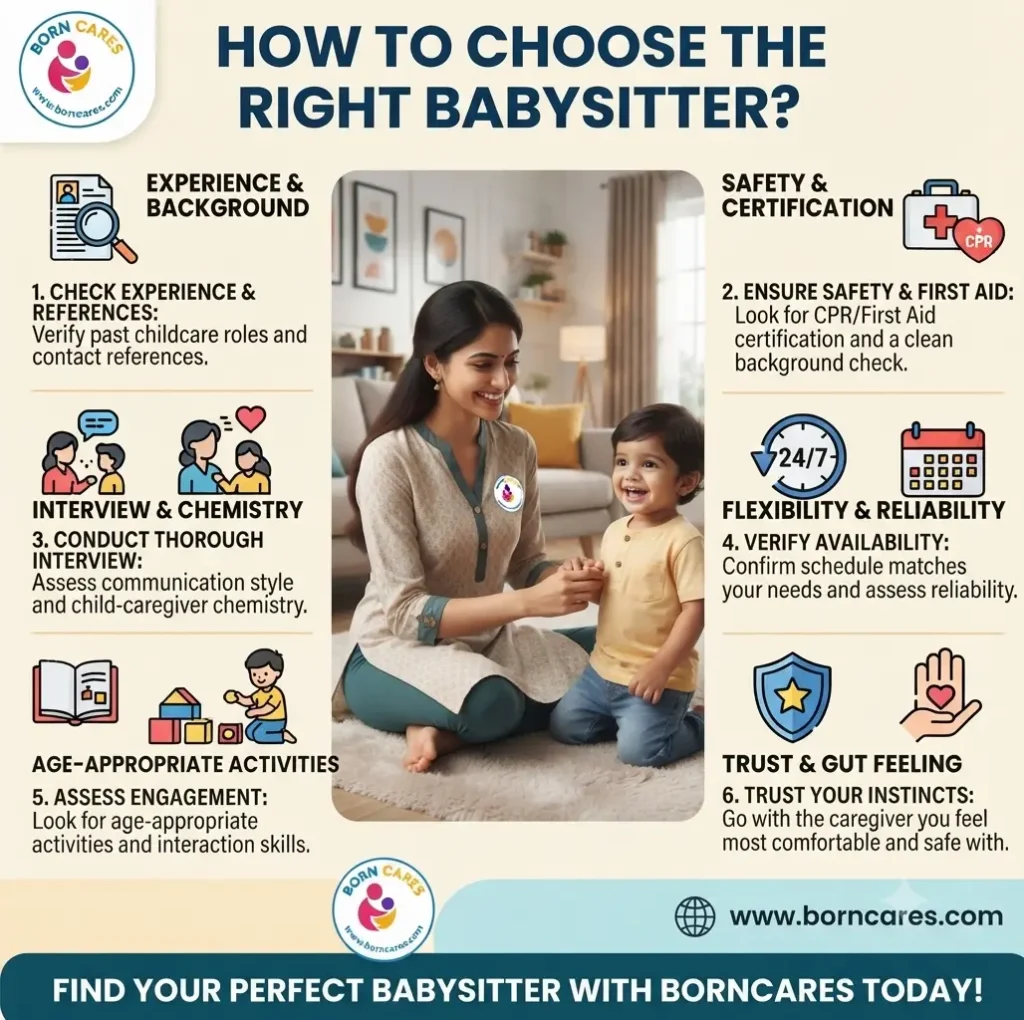
Choosing someone to care for your child is not a decision most parents take lightly. Whether you are returning to work, managing a busy schedule, welcoming a newborn, or simply need an extra pair of caring hands at home, finding the right babysitter can feel like a lot.
You may have questions running through your mind.
Will my child feel comfortable with this person? Will they understand my baby’s routine? Can I trust them when I am not around? Do they know how to handle an emergency? How do I know whether I am choosing the right person?
These concerns are completely understandable.
The good news is that finding suitable Babysitter Services does not have to be overwhelming. Instead of trying to find someone who appears perfect on paper, focus on finding a caregiver who is experienced, responsible, patient, attentive, and genuinely suitable for your child’s individual needs.
This guide explains what to look for, what questions to ask, and how to make the process easier for your family.
Start by Understanding What Your Child Needs
Before searching for a babysitter, take a moment to understand what kind of support your child actually requires.
Every family is different. A toddler may need someone who can actively supervise playtime, prepare simple meals, maintain a nap schedule, and keep the child engaged. A newborn may require a caregiver who understands feeding routines, sleep patterns, hygiene, and gentle handling.
Think about your child’s age, daily routine, personality, and specific needs.
For example, ask yourself:
- How many hours will the babysitter need to stay?
- Will the caregiver work during the day, evening, or night?
- Does your child need help with meals?
- Will the babysitter need to manage nap or sleep routines?
- Does your child need help with basic activities and play?
- Are there specific household childcare responsibilities?
- Do you need occasional, regular, or long-term support?
Having clear answers will make your search much easier.
Instead of asking, “Where can I find a babysitter?”, you can ask a more useful question:
“What kind of childcare support will work best for my child and our family?”
That small change in perspective can make the entire process feel more manageable.
Look for Experience That Matches Your Child’s Needs
Experience matters, but the right experience matters even more.
Someone who has cared for older children may not necessarily have the same experience as someone who regularly works with newborns. Similarly, caring for one child can be different from caring for two young children with different routines.
When considering a professional babysitter, ask about their previous childcare experience.
You can ask:
- What age groups have you cared for?
- How long have you worked in childcare?
- Have you cared for newborns?
- Are you comfortable following a child’s feeding and sleeping routine?
- How do you handle a child who is upset or crying?
- What activities do you usually do with children?
- How would you respond if a child suddenly became unwell?
The goal isn’t to test the babysitter with difficult questions. It is to understand whether their experience fits your family’s requirements.
For newborn care in particular, parents should look for someone who understands that babies require patience, attention, cleanliness, and consistent routines.
Pay Attention to How the Babysitter Interacts With Your Child
A resume or experience history can tell you something about a caregiver, but it cannot tell you everything.
One of the most valuable things you can observe is how the babysitter interacts with your child.
Does the caregiver speak gently?
Do they listen?
Do they give your child time to become comfortable?
Do they pay attention when your child communicates?
Do they remain calm when the child becomes restless or starts crying?
Children may not immediately become comfortable with a new person, and that is perfectly normal. You should not expect an instant bond.
Instead, look for patience.
A good caregiver understands that trust develops gradually. They do not force interaction or become frustrated simply because a child needs time.
Ask About Safety and Emergency Situations
Safety should always be one of the first things parents discuss when choosing childcare.
You should feel comfortable asking a potential babysitter how they would respond to common situations.
For example:
- What would you do if my child fell?
- What would you do if my child developed a fever?
- Who would you contact during an emergency?
- Are you comfortable following the family’s safety instructions?
- How do you make sure a child remains supervised?
You should also explain important information about your home and child, including emergency contacts, allergies, medications if applicable, household safety rules, and any other instructions the caregiver needs to know.
Professional Child Care Services should always put the child’s safety, comfort, and well-being at the center of daily care.
Make Your Child’s Routine Clear
Children often feel more comfortable when their routine remains familiar.
If your child normally eats lunch at a certain time, takes an afternoon nap, plays after waking up, and follows a particular bedtime routine, explain these details clearly.
A simple written schedule can be helpful.
For example:
Morning
Breakfast → Playtime → Activity → Snack
Afternoon
Lunch → Quiet time → Nap → Wake-up snack
Evening
Playtime → Dinner → Storytime → Bedtime routine
The exact schedule will depend on your child.
The important thing is that the babysitter understands what your family normally does.
A caregiver should be able to follow your instructions while also understanding that children are not machines. Some days will go according to plan, and other days may be completely different.
Flexibility and patience are both important.
Discuss Responsibilities Before the First Day
Misunderstandings often happen when parents and caregivers have different expectations.
Before the babysitter starts, discuss exactly what their responsibilities will include.
For example, will the babysitter:
- Prepare meals for the child?
- Feed the baby?
- Organize toys after activities?
- Help with bath time?
- Manage nap routines?
- Take the child for a walk?
- Help with school-related routines?
- Provide basic childcare support while parents work?
Clear communication helps everyone.
It is also important to separate childcare responsibilities from unrelated household work. If additional duties are expected, discuss them openly before starting.
When expectations are clear from the beginning, the relationship between the family and caregiver is more comfortable and professional.
Ask Questions, But Don’t Turn the Conversation Into an Interview
It is natural to prepare a long list of questions when hiring a babysitter.
However, remember that you are not simply interviewing someone for a job. You are trying to understand whether this person will fit into your child’s daily life.
Have a genuine conversation.
Ask about their childcare experience, but also ask how they approach children.
You might ask:
- “What do you enjoy most about working with children?”
- “How do you comfort a child who is missing their parents?”
- “What activities do you enjoy doing with young children?”
- “How do you handle a child who refuses to eat or sleep?”
The answers can give you a better understanding of the caregiver’s attitude.
You are looking for someone who can remain calm, communicate clearly, and treat your child with patience and respect.
Don’t Ignore Communication Skills
Good communication between parents and caregivers is extremely important.
Parents should know how their child is doing throughout the day, especially when they are away from home for several hours.
Before hiring, discuss how communication will work.
- Will the babysitter provide regular updates?
- Will they contact you if the child behaves differently than usual?
- What situations require an immediate phone call?
- What information would you like to receive at the end of the day?
These details may seem small, but they can make a big difference to a parent’s peace of mind.
A caregiver who communicates clearly can help parents feel informed rather than constantly worried.
Consider Your Child’s Personality
There is no single type of babysitter who is perfect for every child.
A quiet and sensitive child may respond better to a calm caregiver who gives them time and space.
An energetic child may enjoy someone who is active, playful, and comfortable keeping them engaged.
A baby may need someone particularly patient with feeding, sleeping, and soothing routines.
Think about your child’s personality.
Ask yourself:
What kind of person would make my child feel comfortable and secure?
This question can be more useful than simply looking for the person with the longest list of experience.
Consider Professional Babysitter Services at Home
For many parents, finding and evaluating an individual caregiver independently can take considerable time.
This is one reason some families choose professional Babysitter Services at Home.
A professional childcare service can make the process more structured by helping parents identify care according to their requirements.
This can be particularly useful for working parents, families with newborns, parents who need regular support, or households looking for flexible childcare arrangements.
However, parents should still communicate their child’s requirements clearly.
Professional support works best when the family and caregiver understand what is expected from the beginning.
Don’t Rush Your Decision
When you need childcare urgently, it can be tempting to choose the first available person.
But if possible, give yourself enough time to compare your options.
Think about:
- Experience
- Communication
- Availability
- Childcare approach
- Comfort level
- Safety awareness
- Understanding of your child’s routine
- Compatibility with your family
You do not need to find a “perfect” babysitter.
You need to find someone responsible and suitable for your child’s needs.
If your child takes time to become comfortable, don’t automatically assume something is wrong. Children often need time to build familiarity with a new caregiver.
Build Trust Gradually
Trust is built through consistent actions.
During the first few days, observe how the caregiver handles everyday situations.
- Does the babysitter follow the agreed routine?
- Do they remain attentive?
- Do they communicate changes?
- Does your child gradually become more comfortable?
- Does the caregiver respect your family’s instructions?
These observations are more meaningful than simply making a decision based on one conversation.
If possible, begin with a gradual transition. You can spend some time with the caregiver and child together before leaving the child alone for longer periods.
This can make the change easier for both you and your child.
What Makes a Babysitter Truly Reliable?
A reliable babysitter understands that parents are trusting them with something extremely important.
They should be:
- Responsible — They take childcare duties seriously.
- Patient — They understand that children can be unpredictable.
- Attentive — They notice what the child needs instead of simply being present.
- Communicative — They keep parents informed.
- Respectful — They follow family preferences and boundaries.
- Adaptable — They can respond calmly when a child’s routine changes.
- Child-focused — They prioritize the child’s safety, comfort, and well-being.
These qualities can matter just as much as years of experience.
Choosing Babysitter Services Shouldn’t Feel Like a Burden
Finding childcare can feel stressful because the decision is personal.
You are not simply choosing someone to complete a task. You are choosing someone who may become part of your child’s daily routine.
That is why it is perfectly reasonable to take your time, ask questions, communicate expectations, and trust your observations.
- Start with your child’s needs.
- Look for relevant experience.
- Discuss safety.
- Observe the caregiver’s interaction with your child.
- Make responsibilities clear.
And most importantly, choose someone who treats your child with genuine patience, care, and respect.
Looking for Trusted Babysitter Services?
f you are searching for reliable Babysitter Services in India, BornCares can help you explore childcare support based on your family’s requirements.
Whether you need support for a newborn, regular childcare at home, or assistance while managing work and family responsibilities, choosing the right caregiver can make everyday life easier and more comfortable.
BornCares also offers childcare support including Babysitter Services, Nanny Services, Japa Maid Services, Newborn Care, Premature Baby Care, and Special Child Care.
The right caregiver is not simply someone who watches your child.
It is someone who understands that every child has their own routine, personality, comfort level, and needs.
Ready to Find the Right Caregiver?
Don’t let the search for childcare become another source of stress.
Talk to BornCares today and explore childcare support that fits your family’s needs.