Choosing the right person to care for your child at home is an important decision for every parent. Whether you are a working parent, a first-time mother or a family welcoming a newborn, having the right childcare support can make everyday life more manageable.
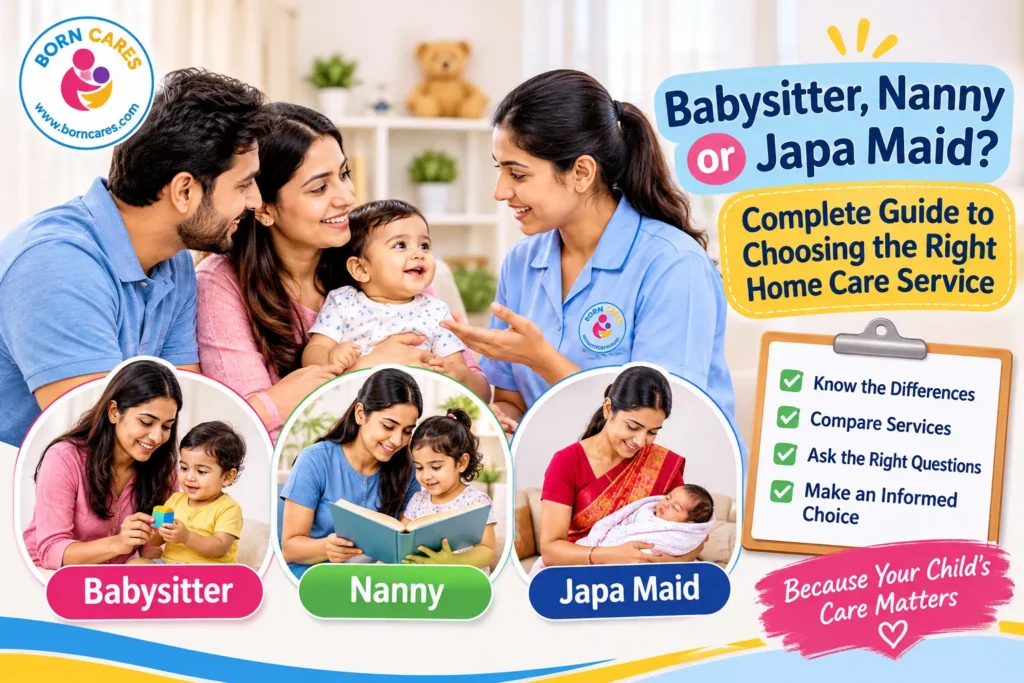
When searching for home care services, you may come across three common options: babysitters, nannies and Japa Maids. Although these roles may sometimes overlap, they are not exactly the same. Each offers a different type of support depending on your child’s age, your family’s routine and the help you need at home.
For example, a babysitter may be suitable when you need occasional childcare for a few hours. A nanny may be a better choice when you need regular support with your child’s daily routine. A Japa Maid generally provides practical support to a mother and newborn during the postnatal period.
Understanding these differences can help you make a more informed decision.
In this guide, we will explain what each service involves, how they differ, what parents should consider before hiring and how to choose the right home care service for their family.
1. What Is a Babysitter?
A babysitter is someone who looks after a child for a specific period, usually when parents are busy, working, attending appointments or managing other responsibilities.
Babysitting is generally suitable for short-term or occasional childcare requirements. Depending on the family’s needs and the agreed responsibilities, a babysitter may help with basic activities such as:
- Supervising the child during the agreed working hours.
- Keeping the child engaged with age-appropriate activities.
- Helping with playtime and simple activities.
- Assisting with meals or snacks prepared by the parents.
- Following the child’s regular schedule.
- Helping with basic hygiene and diaper changes when agreed.
- Informing parents about the child’s activities and needs.
A babysitter’s responsibilities should always be discussed clearly before the work begins.
When Should You Hire a Babysitter?
A babysitter may be a suitable option when:
- You need childcare for a few hours.
- You have an occasional work commitment.
- You need someone to look after your child during appointments.
- You want support during a family event.
- You need temporary help while managing household responsibilities.
For example, if both parents have an important appointment and need someone to supervise their toddler for three hours, a babysitter may be an appropriate choice.
However, parents should not assume that every babysitter provides the same services. Discuss the child’s age, experience requirements, responsibilities and working hours before making a decision.
2. What Is a Nanny?
A nanny provides regular childcare support and may become part of a child’s everyday routine. Families generally hire a nanny when they need ongoing assistance with childcare at home.
Unlike occasional babysitting, nanny services are often arranged for fixed daily working hours. These may include part-time, full-time or extended-hour arrangements, depending on the family’s requirements and the caregiver’s availability.
A nanny’s responsibilities may include:
- Supporting the child’s daily routine.
- Supervising indoor and outdoor play.
- Helping with feeding according to parental instructions.
- Assisting with diaper changes and hygiene.
- Supporting nap-time routines.
- Keeping the child’s play area organised.
- Engaging the child in age-appropriate activities.
- Following parents’ instructions about food, screen time and activities.
- Sharing updates about the child’s day.
The exact duties depend on the child’s age, family expectations and agreed job responsibilities.
When Should You Hire a Nanny?
A nanny may be a good option when:
- Both parents work outside or from home.
- You need regular childcare every day.
- Your child needs a consistent daily routine.
- You want support with playtime, feeding and nap schedules.
- You need ongoing assistance while managing professional responsibilities.
- Your child is more comfortable with familiar, consistent care.
For example, parents working from Monday to Friday may prefer a full-time nanny who can support their child’s routine during their working hours.
Why Is Consistency Important?
Children often feel more comfortable when their daily activities follow a familiar pattern. Having a regular caregiver may help children become familiar with the person supporting them.
Parents should encourage a positive relationship between the child and caregiver while remaining involved in important decisions about the child’s care.
3. What Is a Japa Maid?
A Japa Maid is a caregiver who provides practical support to a mother and newborn during the postnatal period, particularly in the first few weeks after childbirth.
In India, families often arrange Japa Maid support to make the transition into parenthood easier. The type of assistance can vary depending on the caregiver’s experience, the family’s cultural preferences and the duties agreed upon before hiring.
Possible responsibilities may include:
- Helping with agreed newborn care routines.
- Assisting with diaper changes and baby hygiene.
- Supporting the mother with practical baby-related tasks.
- Helping organise the baby’s clothes and essentials.
- Assisting with the baby’s daily routine.
- Helping with simple baby-related household tasks.
- Providing practical support while the mother rests.
- Following the parents’ instructions about newborn care.
Some families may also request help with traditional postnatal routines. These expectations should be discussed clearly and should respect the mother’s comfort, preferences and medical advice.
When Should You Hire a Japa Maid?
A Japa Maid may be suitable when:
- You have recently welcomed a newborn.
- You are a first-time parent and need practical support.
- The mother needs help managing everyday responsibilities after delivery.
- Family members are not available to provide regular assistance.
- You need additional help with newborn care routines.
- You want support during the early postnatal period.
Important Note About Medical Care
A Japa Maid provides practical household and newborn-care support, not medical treatment. She should not replace a doctor, nurse or other qualified healthcare professional.
For medical concerns about the mother’s recovery, breastfeeding, newborn feeding, weight gain or health, parents should consult the appropriate healthcare professional.
4. Babysitter vs Nanny vs Japa Maid: What Is the Difference?
Although all three roles involve care and support at home, their main responsibilities are different.
| Service | Main purpose | Suitable for |
|---|---|---|
| Babysitter | Temporary or occasional childcare | Parents needing help for a few hours |
| Nanny | Regular childcare and daily routine support | Families needing ongoing childcare |
| Japa Maid | Practical postnatal and newborn support | Families with a newborn and a recovering mother |
Difference in Working Hours
Babysitter: Usually hired for a few hours, occasional shifts or specific requirements.
Nanny: Often works part-time, full-time or for other agreed regular schedules.
Japa Maid: May be hired for daytime, overnight or extended-hour support during the postnatal period, depending on the arrangement.
Difference in Responsibilities
Babysitter: Focuses on supervising and caring for the child during the agreed period.
Nanny: Supports the child’s regular daily routine, activities and general care.
Japa Maid: Focuses on practical support for the mother and newborn during the postnatal period.
Difference in the Child’s Age
A babysitter or nanny may care for toddlers and older children, depending on experience.
A newborn caregiver or Japa Maid arrangement is more specifically focused on newborn and postnatal support.
Parents should always check whether the caregiver has relevant experience with their child’s age and individual needs.
5. How to Choose the Right Home Care Service for Your Family
There is no single childcare option that is right for every family. The best choice depends on your actual requirements.
Before contacting a caregiver or childcare service provider, consider the following points.
1. Understand Your Child’s Age and Needs
A newborn, six-month-old baby and three-year-old child have different care requirements.
For example, newborn care involves feeding routines, safe sleep practices, hygiene and close supervision. A toddler may need more attention during playtime, movement and daily activities.
Choose a caregiver whose experience matches your child’s age and care needs.
2. Decide How Many Hours of Support You Need
Think about your daily schedule.
Do you need someone for two or three hours? Do you require regular support during office hours? Do you need overnight assistance after childbirth?
Understanding the required timings will help you discuss suitable arrangements.
3. Identify the Responsibilities Clearly
Prepare a list of tasks you expect the caregiver to handle.
For example:
- Child supervision.
- Feeding assistance.
- Diaper changes.
- Bathing assistance, where agreed and appropriate.
- Playtime and activities.
- Nap-time support.
- Newborn care routines.
- Agreed baby-related household tasks.
Clearly separate childcare responsibilities from general household work. This helps prevent misunderstandings later.
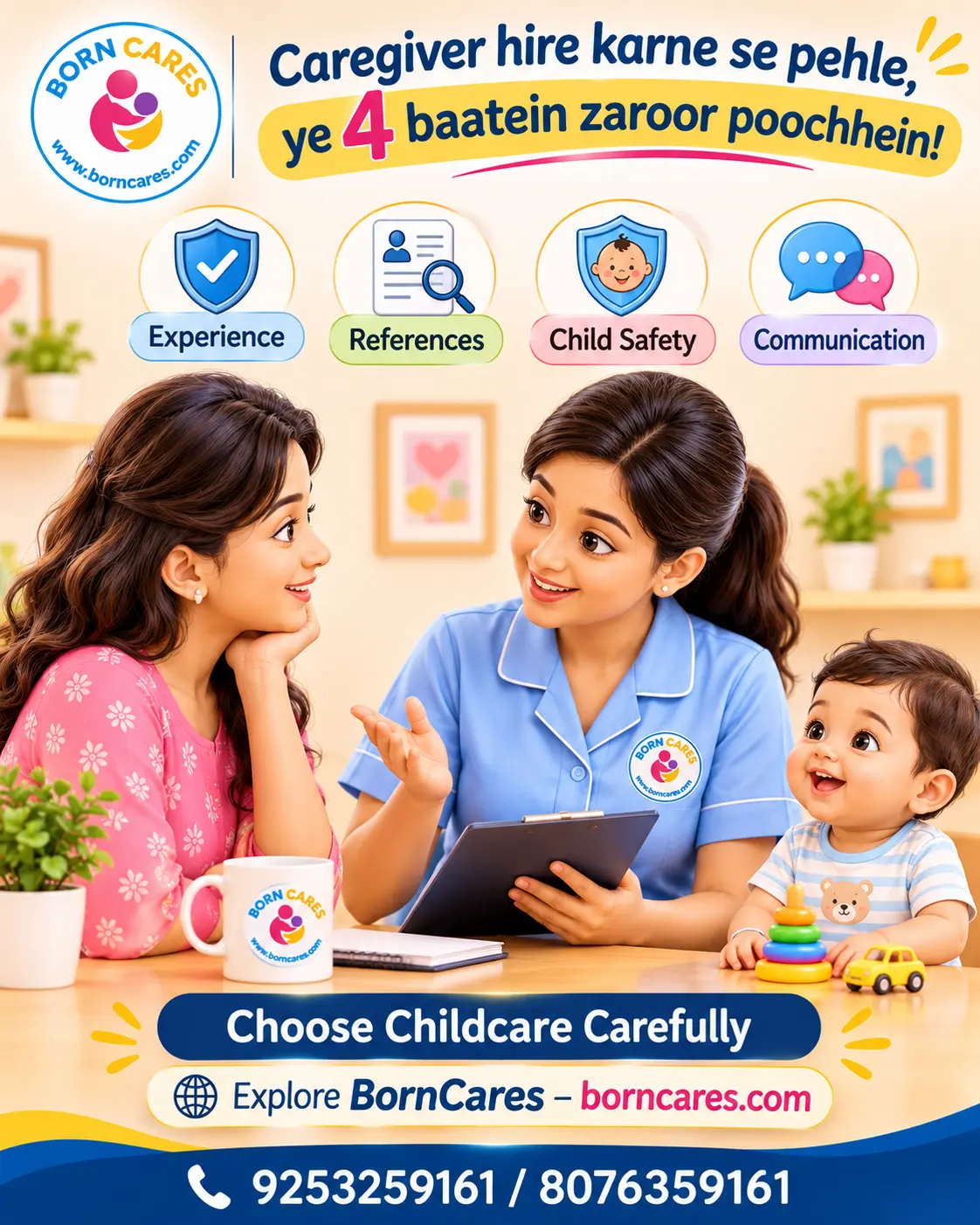
4. Check Experience and References
Experience is an important consideration when choosing a caregiver.
Ask questions such as:
- How long have you worked in childcare?
- What age groups have you cared for?
- Have you looked after newborn babies?
- Are you familiar with safe sleep practices?
- Can you provide previous work references?
Where possible, verify references and follow appropriate identity and background-check procedures.
5. Discuss Safety and Hygiene
A caregiver should understand basic hygiene and safe childcare practices.
Discuss handwashing, clean feeding equipment, safe sleep, supervision and how to respond if a child becomes unwell.
Parents should also explain emergency contacts, household safety rules and any specific instructions relating to their child.
6. Discuss Salary and Working Conditions
Before finalising an arrangement, discuss:
- Monthly salary or hourly payment.
- Daily working hours.
- Weekly days off.
- Food and accommodation, if applicable.
- Overtime expectations.
- Leave arrangements.
- Additional responsibilities.
- Joining date.
The final arrangement should be mutually understood and agreed upon.
6. Important Questions to Ask Before Hiring a Caregiver
An interview can help parents understand whether a caregiver is suitable for their family.
Here are ten useful questions to ask:
1. How much experience do you have in childcare?
Understand the caregiver’s previous experience and the age groups she has worked with.
2. Have you cared for newborn babies or children of this age before?
Ask about relevant experience, especially if your child has specific care requirements.
3. What responsibilities did you handle in your previous job?
This helps you understand the caregiver’s actual work experience.
4. How do you handle a crying or uncomfortable baby?
Look for a calm, patient approach that includes checking the baby’s needs and informing parents.
5. Are you familiar with basic hygiene and safe sleep practices?
Discuss handwashing, clean surroundings and placing babies on their backs on a firm, flat sleep surface.
6. Can you follow our child’s daily routine?
Explain feeding, playtime, nap schedules and other family preferences.
7. What would you do in an emergency?
A caregiver should know how to contact parents and emergency services and follow the family’s emergency instructions.
8. Can you provide references from previous employers?
References can help parents verify previous work experience.
9. What are your expected working hours and salary?
Discuss practical arrangements before confirming the job.
10. Are you comfortable communicating with parents regularly?
Good communication helps parents stay informed about their child’s daily care.
Take time to discuss the answers rather than rushing the hiring decision.
7. Common Mistakes Parents Should Avoid
Hiring a caregiver is not just about finding someone who is available. Parents should also consider suitability, safety and communication.
Avoid these common mistakes:
Hiring Without Checking Experience
Do not select a caregiver based only on availability or salary. Check whether her experience matches your child’s age and needs.
Not Explaining Responsibilities
Unclear job expectations can create confusion. Discuss duties, timings and boundaries before the first working day.
Ignoring Safety Practices
Always discuss supervision, hygiene, safe sleep and emergency procedures.
Not Checking References
Where possible, verify previous employment and references before finalising the arrangement.
Expecting One Person to Handle Everything
Childcare, cooking, cleaning and other household responsibilities are different tasks. Discuss the agreed role clearly and avoid assuming that every caregiver will perform all types of work.
Not Communicating Regularly
Parents should maintain open communication with the caregiver and remain involved in the child’s routine and well-being.
8. How Can BornCares Help Your Family?
Every family has different childcare requirements. Some parents need occasional babysitting support, while others need regular nanny services or practical newborn and postnatal assistance.
BornCares focuses on helping families explore childcare support options based on their requirements.
Our service categories include:
Babysitter Services: Support for families who need childcare during specific hours or occasional requirements.
Nanny Services: Regular childcare support for families who need help with their child’s daily routine.
Newborn Care: Practical support with agreed newborn care routines at home.
Japa Maid / Postnatal Support: Practical assistance for mothers and newborns during the postnatal period.
Special Child Care: Caregiver support based on a child’s individual care requirements, subject to suitable experience and availability.
Flexible Care Options: Part-time, full-time and extended-hour arrangements, depending on requirements and availability.
The right arrangement begins with understanding your family’s needs, your child’s age, required working hours and the responsibilities involved.
Parents should discuss caregiver experience, references, expectations and service availability before making a decision.
9. Frequently Asked Questions
Q1. What is the difference between a babysitter and a nanny?
A babysitter generally provides temporary or occasional childcare, while a nanny usually provides regular support with a child’s daily routine. The exact responsibilities depend on the agreed arrangement.
Q2. Is a Japa Maid the same as a newborn caregiver?
Not necessarily. A Japa Maid generally provides practical postnatal and newborn support. A newborn caregiver may have a different set of responsibilities and experience. Parents should clarify the duties and relevant qualifications or training before hiring.
Q3. Which is better for working parents: a babysitter or a nanny?
A nanny may be more suitable when working parents need regular daily childcare. A babysitter may work better for occasional or short-duration requirements.
Q4. When should parents hire a Japa Maid?
Families may consider arranging Japa Maid support before or shortly after the baby’s arrival, depending on their needs. Discuss the expected start date, duties and duration in advance.
Q5. Can a nanny take care of a newborn baby?
Some nannies have newborn-care experience, while others mainly work with older children. Parents should specifically check newborn-care experience before hiring.
Q6. What should parents check before hiring a caregiver?
Parents should check experience, references, identity, relevant skills, safety awareness, communication, working hours and agreed responsibilities.
Q7. Does BornCares provide part-time and full-time childcare support?
BornCares offers different childcare support options, including part-time, full-time and extended-hour arrangements, depending on family requirements and service availability. Contact the team to discuss your needs.
10. Final Thoughts
Choosing between a babysitter, nanny or Japa Maid depends on the kind of support your family needs.
A babysitter may be suitable for occasional childcare. A nanny may be a better choice for regular daily support. A Japa Maid may help families manage practical newborn and postnatal responsibilities during the early weeks after childbirth.
Before hiring, take time to understand your requirements, check experience and references, discuss safety practices and clearly define responsibilities.
Remember, the right caregiver is not simply someone who is available. It is someone whose experience, working approach and responsibilities are suitable for your family’s needs.
Looking for childcare support at home?
Connect with BornCares to discuss your requirements for babysitter services, nanny services, newborn care or Japa Maid / postnatal support.
Share your location, child’s age, required working hours, type of care needed and expected starting date.
BornCares – Because every family desrves someone they can trust.