
Instagram: https://www.instagram.com/p/Dfq1UsgyxEK/
Whatsapp: https://wa.me/918076359161
Finding the right caregiver for your child is one of the most important decisions you will make as a parent. Whether you are looking for a babysitter for a few hours, a nanny for regular childcare or a newborn caregiver to support your family at home, choosing the right person requires careful thought.
Parents naturally want someone who is caring, responsible, experienced and trustworthy. But how can you understand whether a caregiver is suitable for your child’s needs?
The best way to begin is by asking the right questions.
A friendly conversation during the hiring process can help you understand a caregiver’s experience, previous work, approach to child safety and communication habits. These details can help you make a more informed decision before inviting someone into your home.
At BornCares, we understand that every child and family has different requirements. This is why parents should take time to understand a caregiver’s suitability rather than making a decision based only on availability.
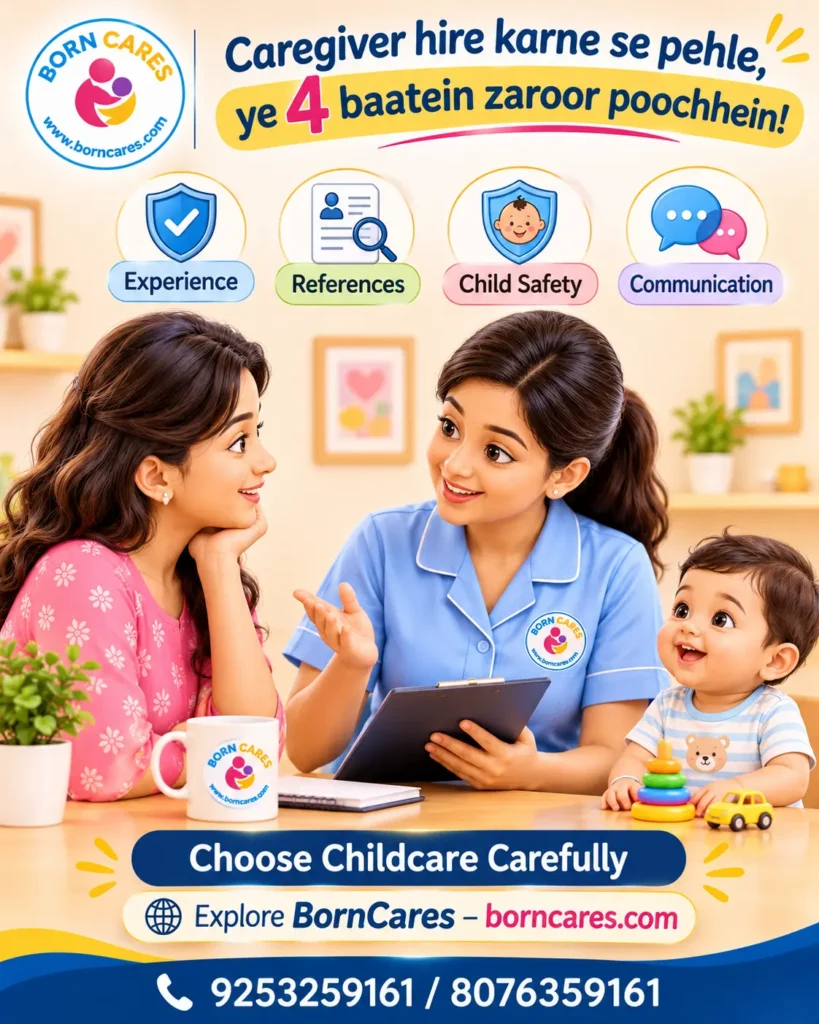
In this guide, we will discuss four important things every parent should ask before hiring a babysitter, nanny or caregiver.
Why Is It Important to Ask Questions Before Hiring a Caregiver?
Hiring a caregiver is not simply about finding someone who can look after your child while you are busy. It is about choosing someone whose experience, behaviour and responsibilities are suitable for your family.
Children have different needs depending on their age, personality and daily routine.
A newborn requires gentle handling, feeding support and safe sleep practices. A toddler needs close supervision, playtime and help with everyday activities. Older children may need support with their daily schedules and after-school routines.
Asking questions before hiring helps parents:
- Understand the caregiver’s previous experience.
- Check whether the caregiver has looked after children of a similar age.
- Discuss safety and hygiene practices.
- Understand how the caregiver handles unexpected situations.
- Verify previous work references.
- Set clear expectations about responsibilities.
- Establish good communication from the beginning.
Before confirming any arrangement, parents should also discuss working hours, salary, duties, weekly days off and other conditions.
Let’s explore the four most important areas in detail.
1. Experience: Ask About Previous Childcare Experience
Experience is one of the first things parents should discuss when interviewing a babysitter, nanny or newborn caregiver.
Looking after children requires patience, attention and an understanding of their everyday needs. A caregiver who has previously worked with children may be more familiar with common childcare routines, but experience should always be checked against the specific requirements of your family.
For example, caring for a newborn is different from caring for a three-year-old child. Parents should therefore ask about experience with the relevant age group.
Important Questions to Ask About Experience
During the interview, consider asking:
1. How long have you worked in childcare?
This helps you understand the caregiver’s general work history.
2. What age groups have you looked after?
Ask whether the caregiver has experience with newborns, infants, toddlers or older children.
3. What responsibilities did you handle in your previous job?
Understand whether the caregiver supported feeding, diaper changes, playtime, hygiene, nap routines or other agreed childcare activities.
4. Have you cared for a child with similar needs?
If your child has a particular routine or requires additional assistance, ask about relevant experience.
5. What do you enjoy most about working with children?
The answer may help you understand the caregiver’s attitude towards childcare.
Why Is Age-Specific Experience Important?
Every stage of childhood brings different care requirements.
Newborns: Newborn care involves feeding routines, diaper changes, hygiene, gentle handling and safe sleep practices. Parents should look for someone with relevant newborn-care experience.
Infants: Babies need close supervision, regular feeding according to parental instructions, appropriate interaction and support with their daily routines.
Toddlers: Toddlers are active and curious. They need close supervision during play, movement, meals and everyday activities.
Older Children: Older children may need support with their daily schedules, activities and supervision according to their family’s instructions.
What Should Parents Look For?
Look for answers that are clear and specific. Ask the caregiver to explain the tasks she performed in previous roles.
Do not assume that someone who has cared for older children automatically has experience with newborns.
If your child has individual care needs, discuss those requirements in detail and check whether the caregiver has suitable experience.
2. References: Ask for Previous Work References
References are another important part of the caregiver selection process.
A previous employer may be able to share information about the caregiver’s work responsibilities, punctuality, communication and general approach to childcare.
While references cannot guarantee future performance, they can help parents understand the caregiver’s previous working arrangements.
Important Questions to Ask About References
Consider asking:
- Can you share contact details of a previous employer who can provide a work reference?
- How long did you work with your previous family?
- What were your main responsibilities there?
- Why did your previous working arrangement end?
- Can we verify your previous childcare experience?
Ask permission before contacting a reference and respect the privacy of previous employers.
What Should Parents Verify?
When speaking with a previous employer, consider asking:
1. Was the caregiver punctual?
Understand whether she generally followed the agreed working schedule.
2. What childcare responsibilities did she handle?
Check whether the responsibilities match the experience described during the interview.
3. How did she communicate with parents?
Good communication is important when someone is caring for your child.
4. Was she able to follow family instructions?
Ask whether she respected the child’s routine and the family’s agreed expectations.
5. Would you consider hiring her again?
This can provide an additional perspective, although the reasons behind the answer should also be understood.
Don’t Ignore Identity Verification
Along with references, follow appropriate identity-verification and background-check procedures.
Check the information provided by the caregiver and use reliable verification methods where available.
Never rely only on a verbal assurance when an important detail can reasonably be verified.
A Helpful Tip for Parents
Keep your questions professional and respectful. The purpose of checking references is to understand previous work experience, not to make assumptions about someone’s character.
3. Child Safety: Make Safety Your First Priority
Child safety should always be a priority when hiring a babysitter, nanny or newborn caregiver.
A caregiver may have previous experience, but parents should also understand how she approaches supervision, hygiene, safe sleep and unexpected situations.
Before hiring, discuss the safety practices that are important for your child’s age and needs.
Important Questions to Ask About Child Safety
1. How do you maintain hygiene while caring for a child?
Discuss handwashing, clean feeding equipment, diaper-changing hygiene and keeping the child’s surroundings clean.
2. Are you familiar with safe sleep practices for babies?
For infants, discuss placing the baby on their back for every sleep on a firm, flat and separate sleep surface, without pillows, loose blankets or soft toys.
3. How do you supervise children during playtime?
Ask how the caregiver keeps children safe during indoor and outdoor activities.
4. What would you do if a child became unwell or had an accident?
The caregiver should know how to contact parents and emergency services and follow the family’s emergency instructions.
5. Are you comfortable following our child’s safety rules?
Explain your expectations about food, hygiene, toys, screen time, visitors and supervision.
Important Child Safety Practices Parents Should Discuss
Safe Sleep for Newborns
Babies should be placed on their backs for sleep on a firm, flat and separate sleep surface. Keep pillows, loose blankets, soft toys and other loose objects out of the baby’s sleep space.
Hygiene and Cleanliness
Discuss proper handwashing before handling the baby, clean feeding equipment and appropriate diaper-changing practices.
Constant Supervision
Young children should receive age-appropriate supervision, especially around water, stairs, kitchens, balconies, electrical outlets and small objects that may cause choking.
Food and Feeding Safety
Explain the child’s feeding routine, food restrictions and any instructions provided by healthcare professionals. Never assume that a caregiver knows the child’s specific feeding requirements.
Emergency Preparedness
Share emergency contact numbers, important family information and clear instructions about what to do if the child needs urgent assistance.
What Should Parents Observe During the Interview?
Pay attention to how the caregiver responds to safety questions.
Does she listen carefully? Does she understand the importance of following instructions? Is she comfortable asking questions when something is unclear?
Parents should also explain that the caregiver must inform them about accidents, injuries, unusual symptoms or other important incidents.
A caregiver should never be expected to diagnose a medical condition or provide treatment beyond their training.
For medical concerns, parents should consult an appropriate healthcare professional.
4. Communication: Discuss How You Will Stay Connected
Good communication between parents and caregivers is essential for a comfortable childcare arrangement.
Parents should be able to explain their expectations clearly, while caregivers should feel comfortable sharing important updates and asking questions.
Communication is especially important when parents are working outside the home or managing professional responsibilities.
Important Questions to Ask About Communication
1. Are you comfortable sharing regular updates about the child’s day?
Discuss how you would like to receive updates during working hours.
2. Will you inform us if the child is uncomfortable or unwell?
Make it clear that important changes in the child’s condition should be communicated promptly.
3. Are you comfortable following our child’s daily routine?
Explain feeding schedules, nap times, play activities and other family instructions.
4. What would you do if you did not understand an instruction?
A caregiver should feel comfortable asking parents for clarification instead of making assumptions.
5. Are you comfortable discussing any concerns with us?
Open communication helps prevent misunderstandings and supports a better working relationship.
Why Does Daily Communication Matter?
Parents may want to know how their child spent the day, whether meals were completed, how nap time went and whether anything unusual happened.
Agree on a simple update routine.
For example, parents and caregivers may discuss:
- Meals and feeding.
- Sleep and nap timings.
- Playtime and activities.
- Diaper changes or hygiene.
- Any unusual behaviour.
- Accidents or safety concerns.
- Questions or instructions for the next day.
The level of detail should match the child’s age and the family’s requirements.
Set Communication Boundaries
Before the caregiver starts work, agree on:
- The preferred way to contact parents.
- When routine updates should be shared.
- Who should be contacted during an emergency.
- How changes in working hours will be communicated.
- How parents can share new instructions.
Respectful communication from both sides helps build a professional working relationship.
5. Other Important Things to Discuss Before Hiring
Experience, references, child safety and communication are four essential areas. However, parents should also discuss practical details before finalising the arrangement.
Working Hours
Clearly explain whether you need part-time, full-time, overnight or extended-hour support.
Confirm the daily schedule and weekly days off.
Salary and Payment
Discuss the agreed salary, payment date, overtime arrangements and any other financial conditions.
Job Responsibilities
Write down the responsibilities expected from the caregiver.
Childcare duties should be clearly separated from general household responsibilities such as cooking and cleaning.
Leave and Emergency Arrangements
Discuss how planned leave, sudden absence and replacement arrangements will be handled.
Starting Date
Agree on the expected joining date and any introduction or adjustment period.
Child’s Individual Routine
Explain the child’s likes, dislikes, feeding preferences, sleep routine, activities and safety requirements.
A clear discussion at the beginning can make the arrangement easier for everyone.
6. Warning Signs Parents Should Not Ignore
While interviewing a caregiver, pay attention to answers and behaviour that may require further clarification.
Some examples include:
- Being unwilling to discuss previous childcare experience.
- Providing inconsistent information about work history.
- Refusing reasonable identity or reference verification.
- Ignoring questions about child safety.
- Being unwilling to follow important parental instructions.
- Giving unclear answers about emergency situations.
- Making promises about skills or experience that cannot be verified.
- Being uncomfortable with reasonable communication expectations.
One unclear answer does not automatically mean someone is unsuitable. Ask follow-up questions and verify important information before making a decision.
If you are not comfortable with the caregiver’s experience, approach or willingness to follow safety instructions, do not rush into hiring.
7. How BornCares Helps Families Explore Childcare Support
Every family has different requirements. Some parents need occasional babysitting, while others need regular nanny services, newborn care assistance or postnatal support.
BornCares helps families explore childcare support options according to their individual requirements.
Our service categories include:
For families looking for occasional or short-duration childcare support, depending on requirements and availability.
For families who need regular assistance with their child’s daily routine.
For parents who need practical support with agreed newborn-care activities at home.
For families seeking caregiver support based on a child’s individual care requirements and suitable caregiver experience.
For mothers and families looking for practical help with agreed newborn and baby-related responsibilities after childbirth.
Part-time, full-time and extended-hour arrangements, depending on family requirements and availability.
Before proceeding, parents should discuss the child’s age, location, working hours, expected responsibilities and relevant experience requirements.
The suitability of a caregiver should always be assessed based on the family’s needs.
8. Frequently Asked Questions
Q1. What are the most important questions to ask before hiring a babysitter?
Ask about childcare experience, previous work references, child safety practices and communication. Also discuss responsibilities, working hours and emergency procedures.
Q2. How can I check a nanny’s experience?
Ask about previous childcare roles, the age groups handled and the responsibilities performed. Where possible, verify references from previous employers.
Q3. Why are references important when hiring a caregiver?
References can help parents understand the caregiver’s previous work experience, reliability, responsibilities and communication habits. They should be considered alongside other verification steps.
Q4. What safety practices should a babysitter know?
A babysitter should understand age-appropriate supervision, hygiene, safe sleep practices for babies and how to contact parents or emergency services when needed.
Q5. Should I explain my child’s daily routine to the caregiver?
Yes. Explain the child’s meals, sleep schedule, play activities, hygiene requirements and safety instructions. Clear expectations help the caregiver follow the family’s routine.
Q6. What should I do if a caregiver cannot answer my questions clearly?
Ask for clarification and examples. Verify important details such as experience and references. Do not rush the hiring decision if you have unresolved concerns.
Q7. Can BornCares help me find childcare support?
BornCares offers childcare service options including babysitter, nanny, newborn care, special child care and Japa Maid / postnatal support. Contact the team to discuss your location, child’s age, required working hours and type of care needed. Service availability and suitability should be confirmed.
9. Final Thoughts: Choose Childcare Carefully
Hiring a caregiver is an important decision because you are choosing someone who will support your child’s everyday needs.
Before making a decision, take time to ask questions about experience, references, child safety and communication.
Do not hesitate to discuss responsibilities, working hours and your child’s individual routine. A clear conversation can help you understand whether the caregiver is suitable for your family.
Remember, the right childcare arrangement is not only about finding someone who is available. It is about choosing support that respects your child’s needs, follows your instructions and keeps safety at the centre of everyday care.
Looking for Childcare Support?
At BornCares, we help families explore childcare options according to their individual requirements.
Share these four details with our team:
- Your location.
- Your child’s age.
- Required working hours.
- Type of care you need.
DM “CARE” to begin your enquiry.
Call / WhatsApp: 9253259161 / 8076359161
Website: https://borncares.com/
Instagram: https://www.instagram.com/p/Dfq1UsgyxEK/
Whatsapp: https://wa.me/918076359161
BornCares – Childcare that fits your family’s needs. ❤️