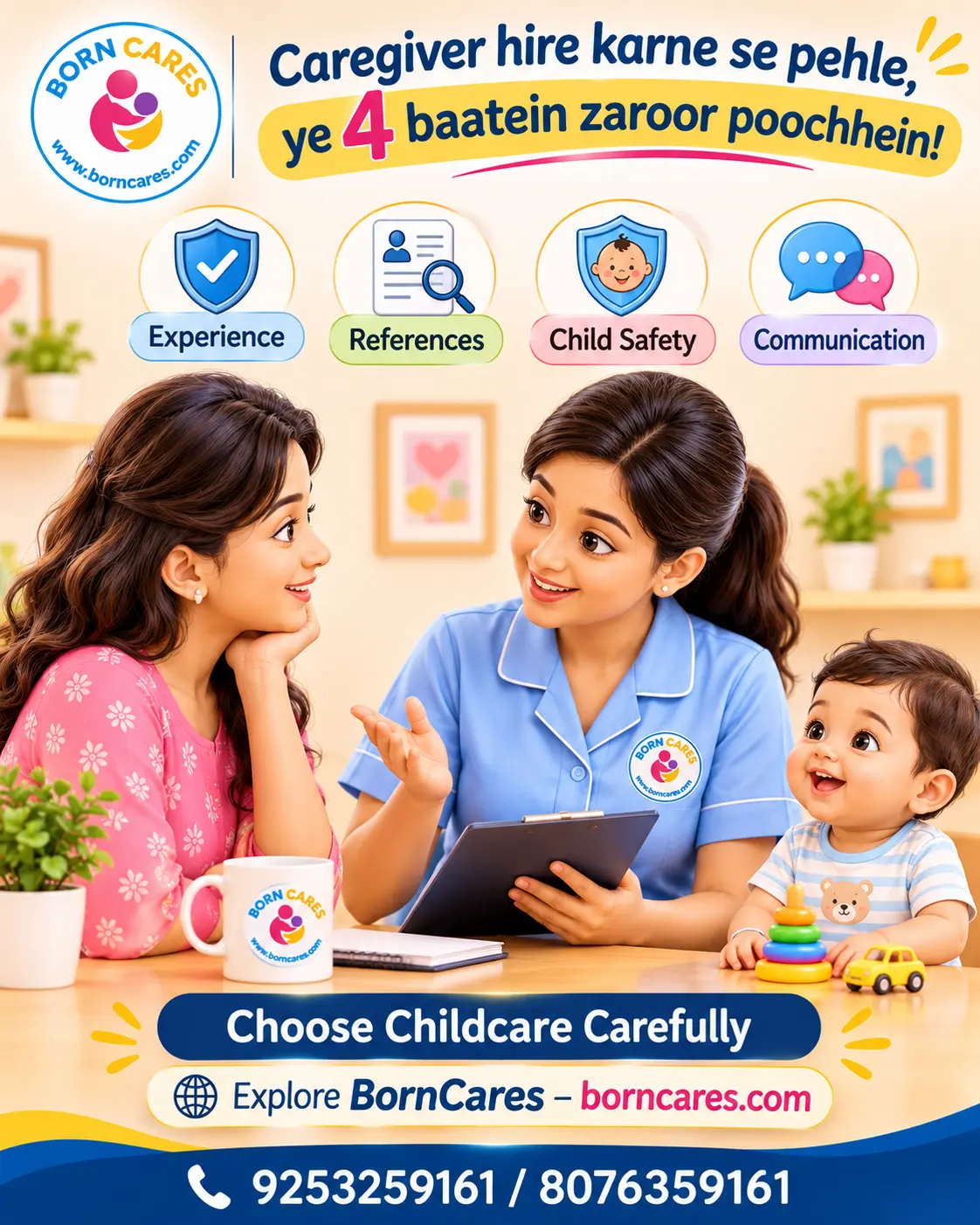
Hiring someone to care for your child or support your family after childbirth is an important decision. Whether you are looking for a babysitter, a full-time nanny or a Japa Maid, you want someone who is responsible, trustworthy, patient and experienced.
For many parents, especially first-time parents, choosing the right caregiver can feel confusing. You may have questions about experience, childcare responsibilities, working hours, safety, hygiene and how the caregiver will handle everyday situations.
A friendly conversation is a good starting point, but it is important to ask the right questions before making a decision. The answers can help you understand the person’s experience, communication style and suitability for your family’s needs.
A babysitter, nanny and Japa Maid may have different responsibilities. Therefore, parents should not assume that every caregiver provides the same type of support.
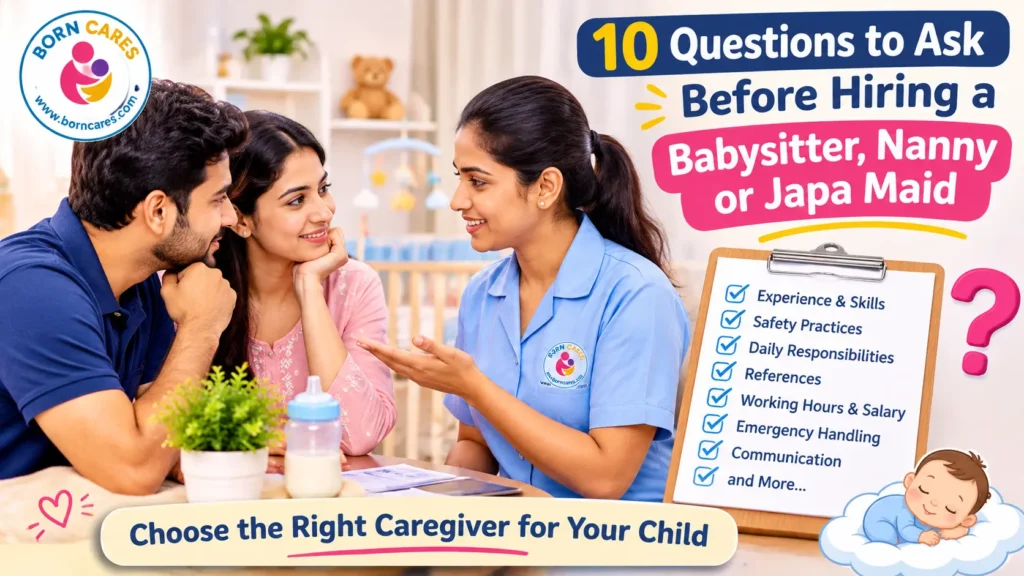
In this guide, BornCares shares 10 important questions to ask before hiring a babysitter, nanny or Japa Maid, along with useful tips to help you make a more informed decision.
Why Is It Important to Interview a Caregiver Before Hiring?
A caregiver may become part of your child’s everyday routine and spend several hours in your home. This makes it important to understand their experience, behaviour and approach to childcare.
An interview gives parents an opportunity to:
- Understand the caregiver’s previous experience.
- Discuss daily childcare responsibilities.
- Learn how they handle difficult situations.
- Understand their hygiene and safety practices.
- Discuss working hours and availability.
- Check whether their expectations match your family’s requirements.
- Identify any concerns before starting the arrangement.
Do not rush the hiring process simply because you need immediate childcare support. Take enough time to ask questions, verify information and arrange a supervised introduction.
10 Important Questions to Ask Before Hiring a Babysitter, Nanny or Japa Maid
1. How Much Experience Do You Have With Children or Newborn Babies?
This should be one of your first questions.
Every child has different needs depending on their age, routine and development. Someone who has cared for older children may not automatically have the experience required for newborn care.
Ask the caregiver about:
- How many years of childcare experience they have.
- The age groups of children they have cared for.
- Whether they have experience with newborn babies.
- What responsibilities they handled in previous jobs.
- Whether they have cared for more than one child.
- Whether they have experience with special childcare requirements.
If you are hiring a Japa Maid, ask about their previous postnatal support experience and the duties they have performed.
What parents should look for:
Look for clear and honest answers. Ask for examples of previous responsibilities rather than relying only on general statements such as “I have a lot of experience.”
Relevant experience should match the actual work you expect the caregiver to perform.
2. What Childcare Responsibilities Have You Handled in Your Previous Jobs?
The second question helps you understand what the caregiver can actually do.
Different families have different expectations. Some may need help with diaper changes and baby hygiene, while others may require regular supervision, playtime and support with daily routines.
Ask about their previous responsibilities, such as:
- Feeding-time assistance.
- Diaper changes.
- Bathing and basic hygiene.
- Changing clothes.
- Burping and settling the baby.
- Supporting age-appropriate activities.
- Following nap routines.
- Keeping baby-care supplies organised.
- Sharing daily updates with parents.
For a Japa Maid, discuss whether the expected role includes practical newborn-care assistance, selected household tasks or support for the mother.
What parents should look for:
The caregiver should be comfortable explaining which tasks they have performed and which tasks they have not handled before.
Clearly discuss the duties before hiring. Do not assume that household cleaning, cooking, medical assistance or other additional work is automatically included in a childcare arrangement.
3. How Do You Handle a Baby Who Is Crying or Feeling Uncomfortable?
Babies cry because they cannot communicate their needs through words. They may be hungry, tired, uncomfortable, overstimulated or seeking closeness.
Ask the caregiver how they respond when a baby cries.
You can also ask:
- What do you check first when a baby cries?
- How do you comfort a baby?
- How do you respond if the baby does not settle?
- When would you inform the parents?
- What would you do if the baby appeared unwell?
What parents should look for:
A suitable caregiver should describe a calm and gentle approach. They should understand that crying is a form of communication and that babies need patience.
They should never shake, hit, shout at or handle a baby roughly.
If a baby cries continuously or shows signs of illness, the caregiver should inform the parents and follow the family’s emergency instructions. Medical concerns should be assessed by a qualified healthcare professional.
4. Are You Familiar With Newborn Hygiene and Safe Sleep Practices?
A newborn’s skin and immune system are still developing. Hygiene and safe sleeping practices are essential parts of everyday newborn care.
Ask the caregiver about their understanding of:
- Handwashing before handling the baby.
- Cleaning the diaper area.
- Keeping baby clothes and supplies clean.
- Basic bathing precautions.
- Umbilical cord care instructions.
- Safe sleep arrangements.
- Preventing overheating.
- Keeping the baby away from smoke and unwell visitors.
For sleep, make sure the caregiver understands that babies should be placed on their backs for every sleep, on a firm, flat and level surface. Pillows, loose blankets, toys and other soft objects should be kept out of the sleeping space.
What parents should look for:
The caregiver should be willing to follow current safe-care guidance and the instructions provided by the parents and healthcare professional.
Do not rely on traditional practices if they conflict with safe newborn-care recommendations.
5. How Do You Follow a Child’s Daily Routine?
Children often feel more comfortable when their everyday routines are familiar and consistent.
A child’s routine may include feeding, sleeping, bathing, playtime, outdoor activities and quiet time.
Ask the caregiver:
- Can you follow a routine prepared by parents?
- How do you manage feeding and nap times?
- Are you comfortable with the child’s likes and dislikes?
- How do you handle changes in the routine?
- How will you update parents about daily activities?
For older babies and young children, you can also discuss suitable activities, toys and playtime.
What parents should look for:
A good caregiver should be willing to understand the child’s individual needs rather than expecting every child to follow the same routine.
Explain your child’s preferences and important instructions before the caregiver starts work.
6. How Would You Handle an Emergency or Unexpected Situation?
This is one of the most important questions parents should ask.
Even when a caregiver is experienced, unexpected situations can happen. A child may develop a fever, fall, choke, have an allergic reaction or experience breathing difficulties.
Ask:
- What would you do if the baby suddenly became unwell?
- How would you contact the parents?
- Do you know when emergency medical help is required?
- Have you received any relevant first-aid training?
- Are you comfortable following written emergency instructions?
What parents should look for:
The caregiver should understand that emergencies require prompt action, clear communication and appropriate medical assistance.
If the caregiver has first-aid or infant CPR training, ask about the training provider and whether the certification is current. Do not assume that every caregiver has this training.
Parents should provide emergency contact numbers, the paediatrician’s details and clear instructions about whom to contact.
A general childcare caregiver should never be expected to diagnose illness or perform medical procedures beyond their qualifications.
7. Can You Provide References From Previous Employers?
Previous employment references can help parents understand the caregiver’s work history and reliability.
Ask whether they can provide references from families they have previously worked with.
Where appropriate, ask for permission to contact those references.
You may ask previous employers about:
- The caregiver’s punctuality.
- Their general behaviour and communication.
- Their childcare responsibilities.
- Their reliability and consistency.
- Their ability to follow instructions.
- Their reason for leaving the previous job.
You should also verify identity information through an appropriate and lawful process.
What parents should look for:
Try to confirm important information rather than depending only on verbal promises.
Handle personal documents and reference information responsibly. Obtain consent where required and avoid sharing private information unnecessarily.
8. What Are Your Available Working Hours and Salary Expectations?
Before hiring, discuss the practical details of the arrangement.
Families may require part-time, full-time, extended-hour or overnight childcare support. The caregiver’s availability should match the family’s actual requirements.
Ask:
- What working hours are you available for?
- Are you comfortable with the proposed schedule?
- Which days are you available?
- What are your salary expectations?
- What weekly rest arrangements do you require?
- How much notice would you need before taking leave?
- Are there any additional responsibilities you are expecting?
For a Japa Maid, also discuss the expected duration of the arrangement and the specific postnatal support duties.
What parents should look for:
Both sides should clearly understand the working arrangement before confirming the job.
Agree on salary, payment dates, working hours, weekly rest, leave, additional duties and notice arrangements in advance.
A written agreement can help avoid misunderstandings later.
9. Are You Comfortable Communicating With Parents and Sharing Daily Updates?
Communication is an important part of a successful childcare arrangement.
Parents need to know how their child is doing, especially when they are away from home.
Ask the caregiver:
- How will you share daily updates?
- Are you comfortable informing parents about feeding and diaper changes?
- Will you communicate if the child refuses food or has difficulty sleeping?
- How will you report unusual behaviour?
- Are you comfortable discussing concerns openly?
What parents should look for:
Look for someone who communicates honestly and respectfully.
The caregiver should not hide mistakes or changes in the child’s behaviour. Parents should also explain how often they expect updates and which communication method they prefer.
A simple daily update can include feeding, diaper changes, sleep periods, activities and any concerns.
10. Are You Comfortable Following Our Family’s Instructions and Childcare Expectations?
Every family has its own preferences and household routines.
Some parents may prefer specific feeding arrangements, while others may have particular instructions about screen time, visitors, toys, bathing or sleeping.
Ask the caregiver whether they are comfortable following the family’s agreed instructions.
Discuss:
- Household safety rules.
- Feeding and sleeping instructions.
- Hygiene expectations.
- Use of mobile phones during working hours.
- Visitors and privacy.
- Childcare responsibilities.
- Communication with other family members.
- Rules about photographs and sharing the child’s information.
What parents should look for:
A suitable caregiver should respect the family’s privacy and follow reasonable childcare instructions.
Parents should also treat caregivers respectfully, explain expectations clearly and provide fair working conditions.
A good relationship is built through mutual trust and communication.
Additional Questions Specifically for Hiring a Japa Maid
A Japa Maid may provide practical support to a mother and newborn during the weeks following childbirth. However, duties can vary significantly between families and service providers.
Before hiring, ask:
- Have you previously worked with newborn babies and new mothers?
- What postnatal support responsibilities have you handled?
- Are you comfortable following the baby’s hygiene and care instructions?
- What household tasks related to the baby can you assist with?
- What are your available working hours and rest arrangements?
- Can you provide references from previous families?
Parents should clearly explain whether they need baby-care assistance, household support related to the baby or other practical help.
A Japa Maid is not automatically a trained nurse or medical professional. Medical advice, maternal recovery assessments and clinical procedures must be handled by qualified healthcare professionals.
Red Flags Parents Should Watch for During the Interview
While interviewing a caregiver, pay attention to their behaviour as well as their answers.
Some warning signs include:
- Refusing reasonable identity or reference checks.
- Giving unclear or contradictory information about experience.
- Showing impatience when discussing a child’s needs.
- Suggesting unsafe sleeping or handling practices.
- Being unwilling to follow agreed safety instructions.
- Making promises about medical treatment without appropriate qualifications.
- Refusing to discuss duties, working hours or salary clearly.
- Showing disrespect towards parents or previous employers.
One concerning answer does not always tell the whole story, but parents should investigate anything that makes them uncomfortable before hiring.
Tips for Parents Before Confirming a Caregiver
After the interview, take a few additional steps to make the arrangement more comfortable.
1. Verify important details: Check identity, experience and references through appropriate methods.
2. Arrange a supervised introduction: Let the caregiver meet your child while a parent is present.
3. Explain daily routines: Share feeding, sleeping, hygiene and safety instructions.
4. Prepare emergency information: Keep phone numbers and medical instructions accessible.
5. Discuss responsibilities in writing: Record working hours, salary, duties and rest arrangements.
6. Review the arrangement regularly: Communicate openly about what is working and what needs improvement.
The goal is not simply to find someone who is available. It is to find a person whose experience, behaviour and responsibilities are suitable for your family’s needs.
How BornCares Helps Families Explore Childcare Support
At BornCares, we understand that finding suitable childcare support is an important decision for parents.
Every family has different requirements. Some parents need occasional babysitting assistance, while others are looking for regular nanny services, newborn care or Japa Maid and postnatal support.
BornCares offers families an opportunity to discuss different childcare requirements, including:
- Babysitter Services
- Nanny Services
- Newborn Care
- Premature Baby Care
- Japa Maid / Postnatal Care
- Special Child Care
- Part-Time, Full-Time and Extended-Hour Support
The suitability and availability of a caregiver depend on the family’s location, schedule, requirements and the caregiver’s relevant experience.
We encourage parents to discuss responsibilities, expectations and availability before confirming an arrangement.
How to Enquire With BornCares
To help us understand your childcare requirements, share:
- Your location.
- Your child’s age.
- Required working hours.
- Type of care needed.
- Expected starting date.
Visit https://borncares.com/ to explore BornCares services and discuss your requirements.
Frequently Asked Questions
1. What should I ask before hiring a babysitter?
Ask about childcare experience, previous responsibilities, availability, references, safety knowledge, emergency response and salary expectations. Explain your child’s routine and discuss the duties before hiring.
2. What questions should I ask before hiring a nanny?
Ask about experience with your child’s age group, daily childcare responsibilities, routine management, communication, working hours, references and safety practices.
3. What should I ask before hiring a Japa Maid?
Ask about newborn-care experience, postnatal support responsibilities, hygiene practices, availability, references, salary and rest arrangements. Clearly explain which baby-care and household tasks are expected.
4. Should I check a caregiver’s references before hiring?
Yes. Where possible, contact previous employers with the caregiver’s permission. Ask about reliability, communication, childcare experience and previous responsibilities.
5. Is a trial period useful when hiring a caregiver?
A supervised introduction or agreed trial period can help parents understand how the caregiver interacts with the child and follows instructions. The terms, duration and payment should be discussed beforehand.
6. Can a babysitter or nanny provide medical care to a newborn?
A general babysitter or nanny should not be expected to diagnose illness, prescribe medicine or perform clinical procedures. Medical care should be provided by appropriately qualified professionals.
7. How can parents build trust with a new caregiver?
Start with clear communication, verified information, agreed responsibilities and a supervised introduction. Share important childcare instructions and review the arrangement regularly.
Conclusion: Ask the Right Questions Before Making Your Decision
Hiring a babysitter, nanny or Japa Maid is about more than finding someone to help with everyday tasks. It is about choosing suitable support for your child and family.
Asking the right questions can help you understand the caregiver’s experience, approach, responsibilities and availability. Take time to verify important details, explain your expectations and make sure both sides are comfortable with the arrangement.
Remember, every child is different, and the right caregiver should respect the child’s individual needs while following the parents’ instructions and appropriate safety practices.
If you are looking for childcare support, start by understanding what your family needs and discussing those requirements clearly.
Looking for a babysitter, nanny or Japa Maid?
Connect with BornCares to discuss suitable childcare support options.
BornCares – Because every family deserves someone they can trust.